# Use tokens (/en/realtime-media/interactive-live-streaming/build/authenticate-users/use-tokens/android)
> For AI agents: see the complete documentation index at [llms.txt](/llms.txt).
To protect your business, it is best practice to authenticate every client that joins a channel. This guide explains how to fetch an authentication token from your token server, use it to join a channel, and renew the token when it expires.
## Understand the tech [#understand-the-tech]
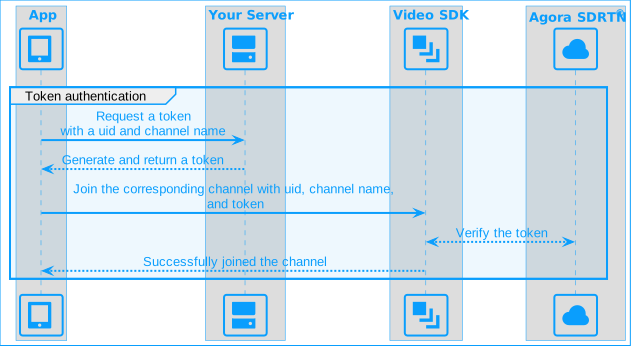
When a user attempts to connect to an Agora channel, your app retrieves a token from the token server in your security infrastructure. Your app then sends this token to Agora SDRTN® for authentication. Agora SDRTN® reads the information stored in the token to validate the request.
The following figure shows the call flow you implement to create step-up-authentication with Agora Interactive Live Streaming:
**Token authentication flow**
## Prerequisites [#prerequisites]
Before starting, ensure that you have:
* Implemented the [Quickstart](../../index.mdx) in your project.
* Deployed a token server using either of the following guides:
* [Deploy a token server](deploy-token-server.mdx)
* [Deploy a middleware server](middleware-token-server.md)
## Implement basic authentication [#implement-basic-authentication]
This section shows you how to implement basic authentication by acquiring a token and using it to join a channel.
### Use a token to join a channel [#use-a-token-to-join-a-channel]
The client requests a token from your authentication server corresponding to the user ID and the channel name. You use the received token to join a channel.
Java
Kotlin
```java
// Channel name
String channelId = "xxx";
// User ID
int uid = 0;
// Request a token from the server corresponding to channelId and uid
String token = getToken(channelId, uid);
// Set channel media options
ChannelMediaOptions option = new ChannelMediaOptions();
option.clientRoleType = Constants.CLIENT_ROLE_BROADCASTER;
// Join a channel
engine.joinChannel(token, channelId, 0, option);
```
```kotlin
// Channel name
val channelId = "xxx"
// User ID
val uid = 0
// Request a token from the server corresponding to channelId and uid
val token = getToken(channelId, uid)
// Set channel media options
val option = ChannelMediaOptions().apply {
clientRoleType = Constants.CLIENT_ROLE_BROADCASTER
}
// Join a channel
engine.joinChannel(token, channelId, 0, option)
```
### Token expiration [#token-expiration]
After you join a channel using a token, the SDK triggers an `onTokenPrivilegeWillExpire` callback, 30 seconds before the token is set to expire.
When the token expires, the SDK triggers an `onRequestToken` callback. After receiving the callback, you regenerate a new token on the server side, and then update the token in one of the following ways:
#### Single channel use-case [#single-channel-use-case]
* Call `renewToken` to pass in the newly generated Token (Recommended).
* Call `updateChannelMediaOptions` to update the token.
* Call `leaveChannel` \[2/2] to leave the current channel, and then pass in a new token when calling `joinChannel` \[2/2] to rejoin the channel.
#### Multi-channel use-case [#multi-channel-use-case]
If you call `joinChannelEx` to join multiple channels, call the `updateChannelMediaOptionsEx` method to update the token.
The following sample code demonstrates how to call `renewToken` to update the token upon receiving an `onTokenPrivilegeWillExpire` callback notification.
Java
Kotlin
```java
class RtcEngineEventHandlerImpl extends IRtcEngineEventHandler {
// Callback is triggered when the token is about to expire
@Override
public void onTokenPrivilegeWillExpire(String token) {
super.onTokenPrivilegeWillExpire(token);
// Request to generate a fresh token
String token = getToken();
// Update token
engine.renewToken(token);
}
}
```
```kotlin
class RtcEngineEventHandlerImpl : IRtcEngineEventHandler() {
// Callback triggered when the token is about to expire
override fun onTokenPrivilegeWillExpire(token: String) {
super.onTokenPrivilegeWillExpire(token)
// Request to generate a fresh token
val newToken = getToken()
// Update the token
engine.renewToken(newToken)
}
}
```
### Complete sample code [#complete-sample-code]
This section presents sample code to implement token authentication in your client.
1. In `/Gradle Scripts/build.gradle(Module: .app)`, add the following dependencies for making HTTP requests to the token server:
```yaml
dependencies {
implementation 'com.squareup.okhttp3:okhttp:3.10.0'
implementation 'com.google.code.gson:gson:2.8.4'
}
```
2. In `MainActivity`, replace the content with the following code:
**Complete sample code for token authentication**
Java
Kotlin
```java
package com.example.rtcquickstart;
import androidx.appcompat.app.AppCompatActivity;
import android.os.Bundle;
import androidx.core.app.ActivityCompat;
import androidx.core.content.ContextCompat;
import android.Manifest;
import android.content.pm.PackageManager;
import android.view.SurfaceView;
import android.widget.FrameLayout;
import android.widget.Toast;
import io.agora.rtc2.Constants;
import io.agora.rtc2.IRtcEngineEventHandler;
import io.agora.rtc2.RtcEngine;
import io.agora.rtc2.video.VideoCanvas;
import io.agora.rtc2.ChannelMediaOptions;
import okhttp3.MediaType;
import okhttp3.OkHttpClient;
import okhttp3.Request;
import okhttp3.RequestBody;
import okhttp3.Response;
import okhttp3.Call;
import okhttp3.Callback;
import com.google.gson.Gson;
import java.util.Map;
import org.json.JSONException;
import org.json.JSONObject;
import java.io.IOException;
public class MainActivity extends AppCompatActivity {
// Fill in the App ID from Agora console
private String appId = "Your App ID";
// Fill in the channel name
private String channelName = "demo";
private String token = "";
private RtcEngine mRtcEngine;
private int joined = 1;
private final IRtcEngineEventHandler mRtcEventHandler = new IRtcEngineEventHandler() {
@Override
public void onUserJoined(int uid, int elapsed) {
runOnUiThread(() -> setupRemoteVideo(uid));
}
@Override
public void onTokenPrivilegeWillExpire(String token) {
fetchToken(1234, channelName, 1);
runOnUiThread(() -> {
Toast toast = Toast.makeText(MainActivity.this, "Token renewed", Toast.LENGTH_SHORT);
toast.show();
});
super.onTokenPrivilegeWillExpire(token);
}
@Override
public void onRequestToken() {
joined = 1;
fetchToken(1234, channelName, 1);
super.onRequestToken();
}
};
private static final int PERMISSION_REQ_ID = 22;
private static final String[] REQUESTED_PERMISSIONS = {
Manifest.permission.RECORD_AUDIO,
Manifest.permission.CAMERA
};
private boolean checkSelfPermission(String permission, int requestCode) {
if (ContextCompat.checkSelfPermission(this, permission) != PackageManager.PERMISSION_GRANTED) {
ActivityCompat.requestPermissions(this, REQUESTED_PERMISSIONS, requestCode);
return false;
}
return true;
}
// Get RTC Token
private void fetchToken(int uid, String channelName, int tokenRole) {
OkHttpClient client = new OkHttpClient();
MediaType JSON = MediaType.parse("application/json; charset=utf-8");
JSONObject json = new JSONObject();
try {
json.put("uid", uid);
json.put("ChannelName", channelName);
json.put("role", tokenRole);
} catch (JSONException e) {
e.printStackTrace();
}
RequestBody requestBody = RequestBody.create(JSON, String.valueOf(json));
Request request = new Request.Builder()
.url("http:///fetch_rtc_token")
.header("Content-Type", "application/json; charset=UTF-8")
.post(requestBody)
.build();
Call call = client.newCall(request);
call.enqueue(new Callback() {
@Override
public void onFailure(Call call, IOException e) {
}
@Override
public void onResponse(Call call, Response response) throws IOException {
if (response.isSuccessful()) {
Gson gson = new Gson();
String result = response.body().string();
Map map = gson.fromJson(result, Map.class);
new Thread(() -> {
token = map.get("token").toString();
ChannelMediaOptions options = new ChannelMediaOptions();
if (joined != 0) {
joined = mRtcEngine.joinChannel(token, channelName, 1234, options);
} else {
mRtcEngine.renewToken(token);
}
}).start();
}
}
});
}
@Override
protected void onCreate(Bundle savedInstanceState) {
super.onCreate(savedInstanceState);
setContentView(R.layout.activity_main);
if (checkSelfPermission(REQUESTED_PERMISSIONS[0], PERMISSION_REQ_ID) &&
checkSelfPermission(REQUESTED_PERMISSIONS[1], PERMISSION_REQ_ID)) {
initializeAndJoinChannel();
}
}
@Override
protected void onDestroy() {
super.onDestroy();
mRtcEngine.leaveChannel();
mRtcEngine.destroy();
}
private void initializeAndJoinChannel() {
try {
mRtcEngine = RtcEngine.create(getBaseContext(), appId, mRtcEventHandler);
} catch (Exception e) {
throw new RuntimeException("Check the error.");
}
mRtcEngine.setChannelProfile(Constants.CHANNEL_PROFILE_LIVE_BROADCASTING);
mRtcEngine.setClientRole(Constants.CLIENT_ROLE_BROADCASTER);
mRtcEngine.enableVideo();
FrameLayout container = findViewById(R.id.local_video_view_container);
SurfaceView surfaceView = new SurfaceView(getBaseContext());
container.addView(surfaceView);
mRtcEngine.setupLocalVideo(new VideoCanvas(surfaceView, VideoCanvas.RENDER_MODE_FIT, 0));
mRtcEngine.startPreview();
fetchToken(1234, channelName, 1);
}
private void setupRemoteVideo(int uid) {
FrameLayout container = findViewById(R.id.remote_video_view_container);
SurfaceView surfaceView = new SurfaceView(getBaseContext());
surfaceView.setZOrderMediaOverlay(true);
container.addView(surfaceView);
mRtcEngine.setupRemoteVideo(new VideoCanvas(surfaceView, VideoCanvas.RENDER_MODE_FIT, uid));
}
}
```
```kotlin
package com.example.rtcquickstart
import android.Manifest;
import android.content.pm.PackageManager;
import android.os.Bundle;
import android.view.SurfaceView;
import android.widget.FrameLayout;
import android.widget.Toast;
import androidx.appcompat.app.AppCompatActivity;
import androidx.core.app.ActivityCompat;
import androidx.core.content.ContextCompat;
import io.agora.rtc2.*;
import io.agora.rtc2.video.VideoCanvas;
import com.google.gson.Gson;
import okhttp3.*;
import org.json.JSONException;
import org.json.JSONObject;
import java.io.IOException;
import java.util.*;
class MainActivity : AppCompatActivity() {
// Fill in the App ID from Agora console
private val appId = "Your App ID"
// Fill in the channel name
private val channelName = "demo"
private var token = ""
private var mRtcEngine: RtcEngine? = null
private var joined = 1
private val mRtcEventHandler = object : IRtcEngineEventHandler() {
override fun onUserJoined(uid: Int, elapsed: Int) {
runOnUiThread {
// After obtaining the user ID in the onUserJoined callback, call setupRemoteVideo to set the remote user view
setupRemoteVideo(uid)
}
}
override fun onTokenPrivilegeWillExpire(token: String) {
fetchToken(1234, channelName, 1)
runOnUiThread {
val toast = Toast.makeText(this@MainActivity, "Token renewed", Toast.LENGTH_SHORT)
toast.show()
}
super.onTokenPrivilegeWillExpire(token)
}
override fun onRequestToken() {
joined = 1
fetchToken(1234, channelName, 1)
super.onRequestToken()
}
}
companion object {
private const val PERMISSION_REQ_ID = 22
private val REQUESTED_PERMISSIONS = arrayOf(
Manifest.permission.RECORD_AUDIO,
Manifest.permission.CAMERA
)
}
private fun checkSelfPermission(permission: String, requestCode: Int): Boolean {
return if (ContextCompat.checkSelfPermission(this, permission) != PackageManager.PERMISSION_GRANTED) {
ActivityCompat.requestPermissions(this, REQUESTED_PERMISSIONS, requestCode)
false
} else {
true
}
}
// Get RTC Token
private fun fetchToken(uid: Int, channelName: String, tokenRole: Int) {
val client = OkHttpClient()
val JSON = MediaType.parse("application/json; charset=utf-8")
val json = JSONObject()
try {
json.put("uid", uid)
json.put("ChannelName", channelName)
json.put("role", tokenRole)
} catch (e: JSONException) {
e.printStackTrace()
}
val requestBody = RequestBody.create(JSON, json.toString())
val request = Request.Builder()
.url("http:///fetch_rtc_token")
.header("Content-Type", "application/json; charset=UTF-8")
.post(requestBody)
.build()
client.newCall(request).enqueue(object : Callback {
override fun onFailure(call: Call, e: IOException) {
// Handle failure
}
override fun onResponse(call: Call, response: Response) {
if (response.isSuccessful) {
val gson = Gson()
val result = response.body?.string()
val map: Map = gson.fromJson(result, Map::class.java)
Thread {
token = map["token"].toString()
// If the user has not joined the channel, use token to join the channel
val options = ChannelMediaOptions()
if (joined != 0) {
joined = mRtcEngine?.joinChannel(token, channelName, 1234, options) ?: -1
} else {
mRtcEngine?.renewToken(token)
}
}.start()
}
}
})
}
override fun onCreate(savedInstanceState: Bundle?) {
super.onCreate(savedInstanceState)
setContentView(R.layout.activity_main)
// If all permissions are granted, initialize the RtcEngine object and join the channel
if (checkSelfPermission(REQUESTED_PERMISSIONS[0], PERMISSION_REQ_ID) &&
checkSelfPermission(REQUESTED_PERMISSIONS[1], PERMISSION_REQ_ID)) {
initializeAndJoinChannel()
}
}
override fun onDestroy() {
super.onDestroy()
mRtcEngine?.leaveChannel()
mRtcEngine?.destroy()
}
private fun initializeAndJoinChannel() {
try {
mRtcEngine = RtcEngine.create(baseContext, appId, mRtcEventHandler)
} catch (e: Exception) {
throw RuntimeException("Check the error.")
}
// In interactive live broadcast, set the channel scene to BROADCASTING
mRtcEngine?.setChannelProfile(Constants.CHANNEL_PROFILE_LIVE_BROADCASTING)
// Depending on the actual situation, set the user role to BROADCASTER or AUDIENCE
mRtcEngine?.setClientRole(Constants.CLIENT_ROLE_BROADCASTER)
// SDK turns off video by default. Call enableVideo to enable video
mRtcEngine?.enableVideo()
val container: FrameLayout = findViewById(R.id.local_video_view_container)
// Call CreateRendererView to create a SurfaceView object and add it as a child to the FrameLayout
val surfaceView = SurfaceView(baseContext)
container.addView(surfaceView)
// Pass the SurfaceView object to Agora to render local video
mRtcEngine?.setupLocalVideo(VideoCanvas(surfaceView, VideoCanvas.RENDER_MODE_FIT, 0))
// Start local video preview
mRtcEngine?.startPreview()
// Get a token from the token server
fetchToken(1234, channelName, 1)
}
private fun setupRemoteVideo(uid: Int) {
val container: FrameLayout = findViewById(R.id.remote_video_view_container)
val surfaceView = SurfaceView(baseContext)
surfaceView.setZOrderMediaOverlay(true)
container.addView(surfaceView)
mRtcEngine?.setupRemoteVideo(VideoCanvas(surfaceView, VideoCanvas.RENDER_MODE_FIT, uid))
}
}
```
The user ID and channel name used to join a channel must be consistent with the values used to generate the token.
## Reference [#reference]
This section contains content that completes the information on this page, or points you to documentation that explains other aspects to this product.
### API reference [#api-reference]
* [`joinChannel` \[2/2\]](https://api-ref.agora.io/en/video-sdk/android/4.x/API/class_irtcengine.html#api_irtcengine_joinchannel2)
* [`renewToken`](https://api-ref.agora.io/en/video-sdk/android/4.x/API/class_irtcengine.html#api_irtcengine_renewtoken)
* [`onTokenPrivilegeWillExpire`](https://api-ref.agora.io/en/video-sdk/android/4.x/API/class_irtcengineeventhandler.html#callback_irtcengineeventhandler_ontokenprivilegewillexpire)