# Raw video processing (/en/realtime-media/broadcast-streaming/build/process-raw-and-custom-media/raw-video-processing/android)
> For AI agents: see the complete documentation index at [llms.txt](/llms.txt).
In certain use-cases, it is necessary to process raw video captured through the camera to achieve desired functionality or enhance the user experience. Video SDK provides the capability to pre-process and post-process the captured video data, allowing you to implement custom playback effects.
## Understand the tech [#understand-the-tech]
Video SDK enables you to pre-process the captured video frames before sending the data to the encoder or perform post-processing on the received video frames after sending the data to the decoder.
The following figure shows the video data processing flow in the SDK video module.
**Process raw video**
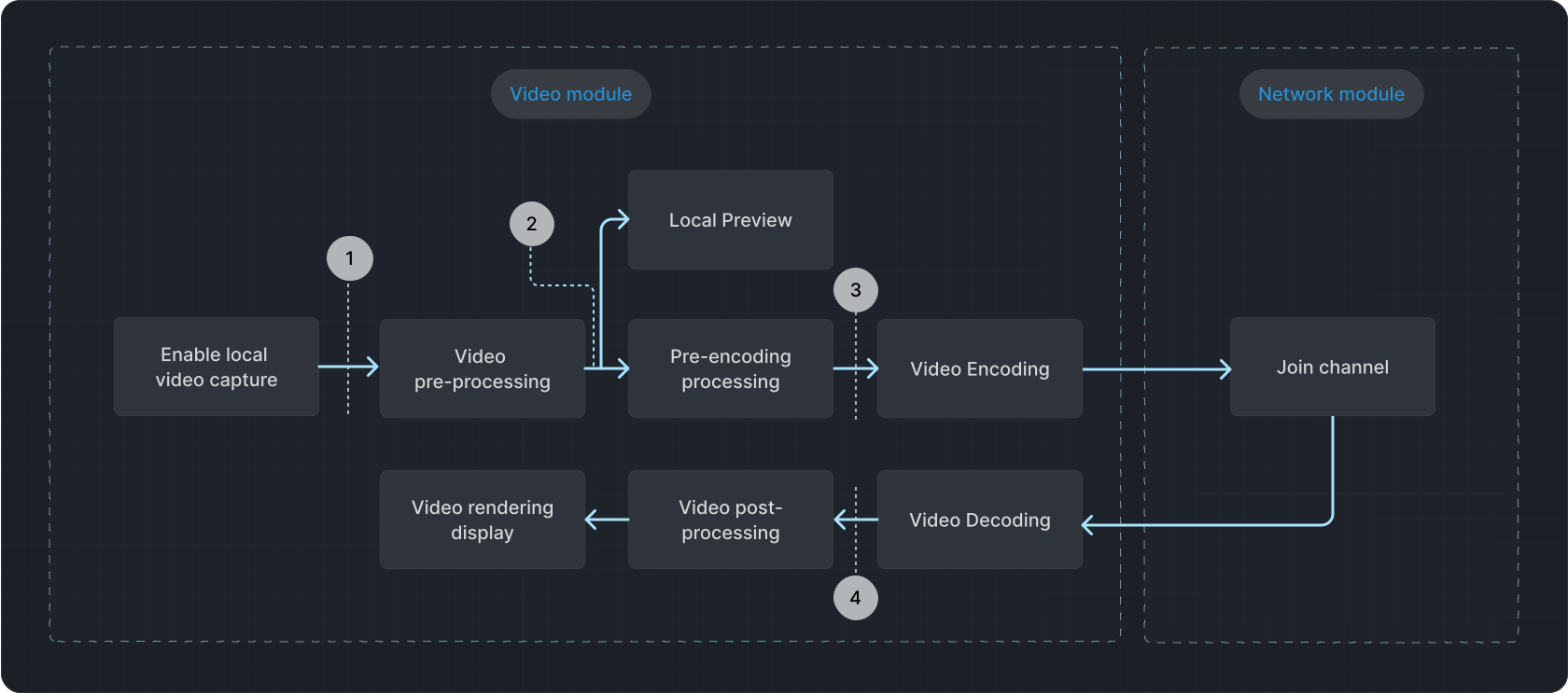
* Position (2) corresponds to the `onCaptureVideoFrame` callback.
* Position (3) corresponds to the `onPreEncodeVideoFrame` callback.
* Position (4) corresponds to the`onRenderVideoFrame` callback.
## Prerequisites [#prerequisites]
Ensure that you have implemented the [SDK quickstart](../../index) in your project.
## Implement raw video processing [#implement-raw-video-processing]
To implement raw video data functionality in your project, refer to the following steps:
1. Before joining the channel, create an `IVideoFrameObserver` object and register the video observer by calling the `registerVideoFrameObserver` method.
Java
Kotlin
```java
int ret = engine.registerVideoFrameObserver(iVideoFrameObserver);
```
```kotlin
val ret = engine.registerVideoFrameObserver(iVideoFrameObserver)
```
1. Implement the `onCaptureVideoFrame` and `onRenderVideoFrame` callbacks. After obtaining the video data, process it according to your specific use-case.
Java
Kotlin
```java
private final IVideoFrameObserver iVideoFrameObserver = new IVideoFrameObserver() {
@Override
public boolean onCaptureVideoFrame(VideoFrame videoFrame) {
Log.i(TAG, "OnEncodedVideoImageReceived" + Thread.currentThread().getName());
if (isSnapshot) {
isSnapshot = false;
// Get the image bitmap
VideoFrame.Buffer buffer = videoFrame.getBuffer();
VideoFrame.I420Buffer i420Buffer = buffer.toI420();
int width = i420Buffer.getWidth();
int height = i420Buffer.getHeight();
ByteBuffer bufferY = i420Buffer.getDataY();
ByteBuffer bufferU = i420Buffer.getDataU();
ByteBuffer bufferV = i420Buffer.getDataV();
byte[] i420 = YUVUtils.toWrappedI420(bufferY, bufferU, bufferV, width, height);
Bitmap bitmap = YUVUtils.NV21ToBitmap(getContext(),
YUVUtils.I420ToNV21(i420, width, height),
width,
height);
Matrix matrix = new Matrix();
matrix.setRotate(270);
// Rotate around the center
Bitmap newBitmap = Bitmap.createBitmap(bitmap, 0, 0, width, height, matrix, false);
// Save to file
saveBitmap2Gallery(newBitmap);
bitmap.recycle();
i420Buffer.release();
}
return false;
}
@Override
public boolean onScreenCaptureVideoFrame(VideoFrame videoFrame) {
return false;
}
@Override
public boolean onMediaPlayerVideoFrame(VideoFrame videoFrame, int i) {
return false;
}
@Override
public boolean onRenderVideoFrame(String s, int i, VideoFrame videoFrame) {
return false;
}
@Override
public int getVideoFrameProcessMode() {
return 0;
}
@Override
public int getVideoFormatPreference() {
return 1;
}
@Override
public int getRotationApplied() {
return 0;
}
@Override
public boolean getMirrorApplied() {
return false;
}
};
```
```kotlin
private val iVideoFrameObserver = object : IVideoFrameObserver {
override fun onCaptureVideoFrame(videoFrame: VideoFrame): Boolean {
Log.i(TAG, "OnEncodedVideoImageReceived${Thread.currentThread().name}")
if (isSnapshot) {
isSnapshot = false
// Get the image bitmap
val buffer = videoFrame.buffer
val i420Buffer = buffer.toI420()
val width = i420Buffer.width
val height = i420Buffer.height
val bufferY = i420Buffer.dataY
val bufferU = i420Buffer.dataU
val bufferV = i420Buffer.dataV
val i420 = YUVUtils.toWrappedI420(bufferY, bufferU, bufferV, width, height)
val bitmap = YUVUtils.NV21ToBitmap(
context = context,
nv21Data = YUVUtils.I420ToNV21(i420, width, height),
width = width,
height = height
)
val matrix = Matrix().apply { setRotate(270f) }
// Rotate around the center
val newBitmap = Bitmap.createBitmap(bitmap, 0, 0, width, height, matrix, false)
// Save to file
saveBitmap2Gallery(newBitmap)
bitmap.recycle()
i420Buffer.release()
}
return false
}
override fun onScreenCaptureVideoFrame(videoFrame: VideoFrame): Boolean {
return false
}
override fun onMediaPlayerVideoFrame(videoFrame: VideoFrame, i: Int): Boolean {
return false
}
override fun onRenderVideoFrame(s: String, i: Int, videoFrame: VideoFrame): Boolean {
return false
}
override fun getVideoFrameProcessMode(): Int {
return 0
}
override fun getVideoFormatPreference(): Int {
return 1
}
override fun getRotationApplied(): Int {
return 0
}
override fun getMirrorApplied(): Boolean {
return false
}
}
```
When modifying parameters in a `VideoFrame`, ensure that the updated parameters match the actual video frame in the buffer. Mismatches may cause issues like unexpected rotation, distortion, or other visual problems in the local preview and the remote video.
## Reference [#reference]
This section contains content that completes the information on this page, or points you to documentation that explains other aspects to this product.
### Sample project [#sample-project]
Agora provides an open source sample project [ProcessRawData](https://github.com/AgoraIO/API-Examples/blob/main/Android/APIExample/app/src/main/java/io/agora/api/example/examples/advanced/ProcessRawData.java) on GitHub. Download it or view the source code for a more detailed example.
### API reference [#api-reference]
* [`registerVideoFrameObserver`](https://api-ref.agora.io/en/video-sdk/android/4.x/API/class_irtcengine.html#api_imediaengine_registervideoframeobserver)
* [`registerVideoEncodedFrameObserver`](https://api-ref.agora.io/en/video-sdk/android/4.x/API/class_irtcengine.html#api_imediaengine_registervideoencodedframeobserver)
* [`onCaptureVideoFrame`](https://api-ref.agora.io/en/video-sdk/android/4.x/API/class_ivideoframeobserver.html#callback_ivideoframeobserver_oncapturevideoframe)
* [`onRenderVideoFrame`](https://api-ref.agora.io/en/video-sdk/android/4.x/API/class_ivideoframeobserver.html#callback_ivideoframeobserver_onrendervideoframe)
* [`getVideoFrameProcessMode`](https://api-ref.agora.io/en/video-sdk/android/4.x/API/class_ivideoframeobserver.html#callback_ivideoframeobserver_getvideoframeprocessmode)
* [`onEncodedVideoFrameReceived`](https://api-ref.agora.io/en/video-sdk/android/4.x/API/class_ivideoencodedframeobserver.html#callback_ivideoencodedframeobserver_onencodedvideoframereceived)