# Use tokens (/en/realtime-media/broadcast-streaming/build/authenticate-users/use-tokens)
> For AI agents: see the complete documentation index at [llms.txt](/llms.txt).
To protect your business, it is best practice to authenticate every client that joins a channel. This guide explains how to fetch an authentication token from your token server, use it to join a channel, and renew the token when it expires.
## Understand the tech [#understand-the-tech]
<_PlatformTabsGroup groupMode="structured" canonicalPlatform="web" platforms="["android","ios","macos","web","windows","electron","flutter","react-native","javascript","unity","unreal","blueprint","python","linux-cpp","linux-c"]" showTabs="true">
<_PlatformPanel platform="android">
<_PlatformProcessedMarker groupMode="structured" canonicalPlatform="web" platform="android" />
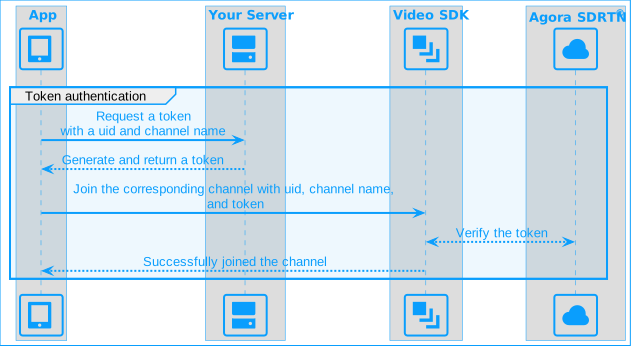
When a user attempts to connect to an Agora channel, your app retrieves a token from the token server in your security infrastructure. Your app then sends this token to Agora SDRTN® for authentication. Agora SDRTN® reads the information stored in the token to validate the request.
The following figure shows the call flow you implement to create step-up-authentication with Agora Broadcast Streaming:
**Token authentication flow**
## Prerequisites [#prerequisites]
Before starting, ensure that you have:
* Implemented the [Quickstart](../../index) in your project.
* Deployed a token server using either of the following guides:
* [Deploy a token server](deploy-token-server)
* [Deploy a middleware server](middleware-token-server)
## Implement basic authentication [#implement-basic-authentication]
This section shows you how to implement basic authentication by acquiring a token and using it to join a channel.
### Use a token to join a channel [#use-a-token-to-join-a-channel]
The client requests a token from your authentication server corresponding to the user ID and the channel name. You use the received token to join a channel.
Java
Kotlin
```java
// Channel name
String channelId = "xxx";
// User ID
int uid = 0;
// Request a token from the server corresponding to channelId and uid
String token = getToken(channelId, uid);
// Set channel media options
ChannelMediaOptions option = new ChannelMediaOptions();
option.clientRoleType = Constants.CLIENT_ROLE_BROADCASTER;
// Join a channel
engine.joinChannel(token, channelId, 0, option);
```
```kotlin
// Channel name
val channelId = "xxx"
// User ID
val uid = 0
// Request a token from the server corresponding to channelId and uid
val token = getToken(channelId, uid)
// Set channel media options
val option = ChannelMediaOptions().apply {
clientRoleType = Constants.CLIENT_ROLE_BROADCASTER
}
// Join a channel
engine.joinChannel(token, channelId, 0, option)
```
### Token expiration [#token-expiration]
After you join a channel using a token, the SDK triggers an `onTokenPrivilegeWillExpire` callback, 30 seconds before the token is set to expire.
When the token expires, the SDK triggers an `onRequestToken` callback. After receiving the callback, you regenerate a new token on the server side, and then update the token in one of the following ways:
#### Single channel use-case [#single-channel-use-case]
* Call `renewToken` to pass in the newly generated Token (Recommended).
* Call `updateChannelMediaOptions` to update the token.
* Call `leaveChannel` \[2/2] to leave the current channel, and then pass in a new token when calling `joinChannel` \[2/2] to rejoin the channel.
#### Multi-channel use-case [#multi-channel-use-case]
If you call `joinChannelEx` to join multiple channels, call the `updateChannelMediaOptionsEx` method to update the token.
The following sample code demonstrates how to call `renewToken` to update the token upon receiving an `onTokenPrivilegeWillExpire` callback notification.
Java
Kotlin
```java
class RtcEngineEventHandlerImpl extends IRtcEngineEventHandler {
// Callback is triggered when the token is about to expire
@Override
public void onTokenPrivilegeWillExpire(String token) {
super.onTokenPrivilegeWillExpire(token);
// Request to generate a fresh token
String token = getToken();
// Update token
engine.renewToken(token);
}
}
```
```kotlin
class RtcEngineEventHandlerImpl : IRtcEngineEventHandler() {
// Callback triggered when the token is about to expire
override fun onTokenPrivilegeWillExpire(token: String) {
super.onTokenPrivilegeWillExpire(token)
// Request to generate a fresh token
val newToken = getToken()
// Update the token
engine.renewToken(newToken)
}
}
```
### Complete sample code [#complete-sample-code]
This section presents sample code to implement token authentication in your client.
1. In `/Gradle Scripts/build.gradle(Module: .app)`, add the following dependencies for making HTTP requests to the token server:
```yaml
dependencies {
implementation 'com.squareup.okhttp3:okhttp:3.10.0'
implementation 'com.google.code.gson:gson:2.8.4'
}
```
2. In `MainActivity`, replace the content with the following code:
**Complete sample code for token authentication**
Java
Kotlin
```java
package com.example.rtcquickstart;
import androidx.appcompat.app.AppCompatActivity;
import android.os.Bundle;
import androidx.core.app.ActivityCompat;
import androidx.core.content.ContextCompat;
import android.Manifest;
import android.content.pm.PackageManager;
import android.view.SurfaceView;
import android.widget.FrameLayout;
import android.widget.Toast;
import io.agora.rtc2.Constants;
import io.agora.rtc2.IRtcEngineEventHandler;
import io.agora.rtc2.RtcEngine;
import io.agora.rtc2.video.VideoCanvas;
import io.agora.rtc2.ChannelMediaOptions;
import okhttp3.MediaType;
import okhttp3.OkHttpClient;
import okhttp3.Request;
import okhttp3.RequestBody;
import okhttp3.Response;
import okhttp3.Call;
import okhttp3.Callback;
import com.google.gson.Gson;
import java.util.Map;
import org.json.JSONException;
import org.json.JSONObject;
import java.io.IOException;
public class MainActivity extends AppCompatActivity {
// Fill in the App ID from Agora console
private String appId = "Your App ID";
// Fill in the channel name
private String channelName = "demo";
private String token = "";
private RtcEngine mRtcEngine;
private int joined = 1;
private final IRtcEngineEventHandler mRtcEventHandler = new IRtcEngineEventHandler() {
@Override
public void onUserJoined(int uid, int elapsed) {
runOnUiThread(() -> setupRemoteVideo(uid));
}
@Override
public void onTokenPrivilegeWillExpire(String token) {
fetchToken(1234, channelName, 1);
runOnUiThread(() -> {
Toast toast = Toast.makeText(MainActivity.this, "Token renewed", Toast.LENGTH_SHORT);
toast.show();
});
super.onTokenPrivilegeWillExpire(token);
}
@Override
public void onRequestToken() {
joined = 1;
fetchToken(1234, channelName, 1);
super.onRequestToken();
}
};
private static final int PERMISSION_REQ_ID = 22;
private static final String[] REQUESTED_PERMISSIONS = {
Manifest.permission.RECORD_AUDIO,
Manifest.permission.CAMERA
};
private boolean checkSelfPermission(String permission, int requestCode) {
if (ContextCompat.checkSelfPermission(this, permission) != PackageManager.PERMISSION_GRANTED) {
ActivityCompat.requestPermissions(this, REQUESTED_PERMISSIONS, requestCode);
return false;
}
return true;
}
// Get RTC Token
private void fetchToken(int uid, String channelName, int tokenRole) {
OkHttpClient client = new OkHttpClient();
MediaType JSON = MediaType.parse("application/json; charset=utf-8");
JSONObject json = new JSONObject();
try {
json.put("uid", uid);
json.put("ChannelName", channelName);
json.put("role", tokenRole);
} catch (JSONException e) {
e.printStackTrace();
}
RequestBody requestBody = RequestBody.create(JSON, String.valueOf(json));
Request request = new Request.Builder()
.url("http:///fetch_rtc_token")
.header("Content-Type", "application/json; charset=UTF-8")
.post(requestBody)
.build();
Call call = client.newCall(request);
call.enqueue(new Callback() {
@Override
public void onFailure(Call call, IOException e) {
}
@Override
public void onResponse(Call call, Response response) throws IOException {
if (response.isSuccessful()) {
Gson gson = new Gson();
String result = response.body().string();
Map map = gson.fromJson(result, Map.class);
new Thread(() -> {
token = map.get("token").toString();
ChannelMediaOptions options = new ChannelMediaOptions();
if (joined != 0) {
joined = mRtcEngine.joinChannel(token, channelName, 1234, options);
} else {
mRtcEngine.renewToken(token);
}
}).start();
}
}
});
}
@Override
protected void onCreate(Bundle savedInstanceState) {
super.onCreate(savedInstanceState);
setContentView(R.layout.activity_main);
if (checkSelfPermission(REQUESTED_PERMISSIONS[0], PERMISSION_REQ_ID) &&
checkSelfPermission(REQUESTED_PERMISSIONS[1], PERMISSION_REQ_ID)) {
initializeAndJoinChannel();
}
}
@Override
protected void onDestroy() {
super.onDestroy();
mRtcEngine.leaveChannel();
mRtcEngine.destroy();
}
private void initializeAndJoinChannel() {
try {
mRtcEngine = RtcEngine.create(getBaseContext(), appId, mRtcEventHandler);
} catch (Exception e) {
throw new RuntimeException("Check the error.");
}
mRtcEngine.setChannelProfile(Constants.CHANNEL_PROFILE_LIVE_BROADCASTING);
mRtcEngine.setClientRole(Constants.CLIENT_ROLE_BROADCASTER);
mRtcEngine.enableVideo();
FrameLayout container = findViewById(R.id.local_video_view_container);
SurfaceView surfaceView = new SurfaceView(getBaseContext());
container.addView(surfaceView);
mRtcEngine.setupLocalVideo(new VideoCanvas(surfaceView, VideoCanvas.RENDER_MODE_FIT, 0));
mRtcEngine.startPreview();
fetchToken(1234, channelName, 1);
}
private void setupRemoteVideo(int uid) {
FrameLayout container = findViewById(R.id.remote_video_view_container);
SurfaceView surfaceView = new SurfaceView(getBaseContext());
surfaceView.setZOrderMediaOverlay(true);
container.addView(surfaceView);
mRtcEngine.setupRemoteVideo(new VideoCanvas(surfaceView, VideoCanvas.RENDER_MODE_FIT, uid));
}
}
```
```kotlin
package com.example.rtcquickstart
import android.Manifest;
import android.content.pm.PackageManager;
import android.os.Bundle;
import android.view.SurfaceView;
import android.widget.FrameLayout;
import android.widget.Toast;
import androidx.appcompat.app.AppCompatActivity;
import androidx.core.app.ActivityCompat;
import androidx.core.content.ContextCompat;
import io.agora.rtc2.*;
import io.agora.rtc2.video.VideoCanvas;
import com.google.gson.Gson;
import okhttp3.*;
import org.json.JSONException;
import org.json.JSONObject;
import java.io.IOException;
import java.util.*;
class MainActivity : AppCompatActivity() {
// Fill in the App ID from Agora console
private val appId = "Your App ID"
// Fill in the channel name
private val channelName = "demo"
private var token = ""
private var mRtcEngine: RtcEngine? = null
private var joined = 1
private val mRtcEventHandler = object : IRtcEngineEventHandler() {
override fun onUserJoined(uid: Int, elapsed: Int) {
runOnUiThread {
// After obtaining the user ID in the onUserJoined callback, call setupRemoteVideo to set the remote user view
setupRemoteVideo(uid)
}
}
override fun onTokenPrivilegeWillExpire(token: String) {
fetchToken(1234, channelName, 1)
runOnUiThread {
val toast = Toast.makeText(this@MainActivity, "Token renewed", Toast.LENGTH_SHORT)
toast.show()
}
super.onTokenPrivilegeWillExpire(token)
}
override fun onRequestToken() {
joined = 1
fetchToken(1234, channelName, 1)
super.onRequestToken()
}
}
companion object {
private const val PERMISSION_REQ_ID = 22
private val REQUESTED_PERMISSIONS = arrayOf(
Manifest.permission.RECORD_AUDIO,
Manifest.permission.CAMERA
)
}
private fun checkSelfPermission(permission: String, requestCode: Int): Boolean {
return if (ContextCompat.checkSelfPermission(this, permission) != PackageManager.PERMISSION_GRANTED) {
ActivityCompat.requestPermissions(this, REQUESTED_PERMISSIONS, requestCode)
false
} else {
true
}
}
// Get RTC Token
private fun fetchToken(uid: Int, channelName: String, tokenRole: Int) {
val client = OkHttpClient()
val JSON = MediaType.parse("application/json; charset=utf-8")
val json = JSONObject()
try {
json.put("uid", uid)
json.put("ChannelName", channelName)
json.put("role", tokenRole)
} catch (e: JSONException) {
e.printStackTrace()
}
val requestBody = RequestBody.create(JSON, json.toString())
val request = Request.Builder()
.url("http:///fetch_rtc_token")
.header("Content-Type", "application/json; charset=UTF-8")
.post(requestBody)
.build()
client.newCall(request).enqueue(object : Callback {
override fun onFailure(call: Call, e: IOException) {
// Handle failure
}
override fun onResponse(call: Call, response: Response) {
if (response.isSuccessful) {
val gson = Gson()
val result = response.body?.string()
val map: Map = gson.fromJson(result, Map::class.java)
Thread {
token = map["token"].toString()
// If the user has not joined the channel, use token to join the channel
val options = ChannelMediaOptions()
if (joined != 0) {
joined = mRtcEngine?.joinChannel(token, channelName, 1234, options) ?: -1
} else {
mRtcEngine?.renewToken(token)
}
}.start()
}
}
})
}
override fun onCreate(savedInstanceState: Bundle?) {
super.onCreate(savedInstanceState)
setContentView(R.layout.activity_main)
// If all permissions are granted, initialize the RtcEngine object and join the channel
if (checkSelfPermission(REQUESTED_PERMISSIONS[0], PERMISSION_REQ_ID) &&
checkSelfPermission(REQUESTED_PERMISSIONS[1], PERMISSION_REQ_ID)) {
initializeAndJoinChannel()
}
}
override fun onDestroy() {
super.onDestroy()
mRtcEngine?.leaveChannel()
mRtcEngine?.destroy()
}
private fun initializeAndJoinChannel() {
try {
mRtcEngine = RtcEngine.create(baseContext, appId, mRtcEventHandler)
} catch (e: Exception) {
throw RuntimeException("Check the error.")
}
// In interactive live broadcast, set the channel scene to BROADCASTING
mRtcEngine?.setChannelProfile(Constants.CHANNEL_PROFILE_LIVE_BROADCASTING)
// Depending on the actual situation, set the user role to BROADCASTER or AUDIENCE
mRtcEngine?.setClientRole(Constants.CLIENT_ROLE_BROADCASTER)
// SDK turns off video by default. Call enableVideo to enable video
mRtcEngine?.enableVideo()
val container: FrameLayout = findViewById(R.id.local_video_view_container)
// Call CreateRendererView to create a SurfaceView object and add it as a child to the FrameLayout
val surfaceView = SurfaceView(baseContext)
container.addView(surfaceView)
// Pass the SurfaceView object to Agora to render local video
mRtcEngine?.setupLocalVideo(VideoCanvas(surfaceView, VideoCanvas.RENDER_MODE_FIT, 0))
// Start local video preview
mRtcEngine?.startPreview()
// Get a token from the token server
fetchToken(1234, channelName, 1)
}
private fun setupRemoteVideo(uid: Int) {
val container: FrameLayout = findViewById(R.id.remote_video_view_container)
val surfaceView = SurfaceView(baseContext)
surfaceView.setZOrderMediaOverlay(true)
container.addView(surfaceView)
mRtcEngine?.setupRemoteVideo(VideoCanvas(surfaceView, VideoCanvas.RENDER_MODE_FIT, uid))
}
}
```
The user ID and channel name used to join a channel must be consistent with the values used to generate the token.
## Reference [#reference]
This section contains content that completes the information on this page, or points you to documentation that explains other aspects to this product.
### API reference [#api-reference]
* [`joinChannel` \[2/2\]](https://api-ref.agora.io/en/video-sdk/android/4.x/API/class_irtcengine.html#api_irtcengine_joinchannel2)
* [`renewToken`](https://api-ref.agora.io/en/video-sdk/android/4.x/API/class_irtcengine.html#api_irtcengine_renewtoken)
* [`onTokenPrivilegeWillExpire`](https://api-ref.agora.io/en/video-sdk/android/4.x/API/class_irtcengineeventhandler.html#callback_irtcengineeventhandler_ontokenprivilegewillexpire)
<_PlatformProcessedMarker close="true" />
<_PlatformPanel platform="ios">
<_PlatformProcessedMarker groupMode="structured" canonicalPlatform="web" platform="ios" />
When a user attempts to connect to an Agora channel, your app retrieves a token from the token server in your security infrastructure. Your app then sends this token to Agora SDRTN® for authentication. Agora SDRTN® reads the information stored in the token to validate the request.
The following figure shows the call flow you implement to create step-up-authentication with Agora Broadcast Streaming:
**Token authentication flow**

## Prerequisites [#prerequisites-1]
Before starting, ensure that you have:
* Implemented the [Quickstart](../../index) in your project.
* Deployed a token server using either of the following guides:
* [Deploy a token server](deploy-token-server)
* [Deploy a middleware server](middleware-token-server)
## Implement basic authentication [#implement-basic-authentication-1]
This section shows you how to implement basic authentication by acquiring a token and using it to join a channel.
### Use a token to join a channel [#use-a-token-to-join-a-channel-1]
The client requests a token from your authentication server corresponding to the user ID and the channel name. You use the received token to join a channel.
```swift
// Channel name
let channelId: String = "xxxx"
// User ID
let uid: UInt = 0
// Request the server to generate a token corresponding to channelId and uid
let token = getToken()
// Set channel media options
let mediaOption = AgoraRtcChannelMediaOptions()
// Set the user role as host
mediaOption.clientRoleType = .broadcaster
// Use the token to join a channel
agoraKit.joinChannel(byToken: token, channelId: channelId, uid: uid, mediaOptions: mediaOption)
```
### Token expiration [#token-expiration-1]
After you join a channel using a token, the SDK triggers an `onTokenPrivilegeWillExpire` callback, 30 seconds before the token is set to expire.
When the token expires, the SDK triggers an `onRequestToken` callback. After receiving the callback, you regenerate a new token on the server side, and then update the token in one of the following ways:
#### Single channel use-case [#single-channel-use-case-1]
* Call `renewToken` to pass in the newly generated Token (Recommended).
* Call `updateChannelWithMediaOptions` to update the token.
* Call `leaveChannel` \[2/2] to leave the current channel, and then pass in a new token when calling `joinChannelByToken` \[2/4] to rejoin the channel.
#### Multi-channel use-case [#multi-channel-use-case-1]
If you call `joinChannelEx` to join multiple channels, call the `updateChannelExWithMediaOptions` method to update the token.
The following sample code demonstrates how to call `renewToken` to update the token upon receiving an `tokenPrivilegeWillExpire` callback notification.
```swift
extension JoinChannelVideoToken: AgoraRtcEngineDelegate {
// Callback is triggered when the token is about to expire
func rtcEngine(_ engine: AgoraRtcEngineKit, tokenPrivilegeWillExpire token: String) {
// Request to generate a fresh token
let token = getToken()
// Update token
engine.renewToken(token)
}
}
```
### Complete sample code [#complete-sample-code-1]
For a complete implementation of token authentication, replace the content in `ViewController.swift` with the following code. Replace `Your App ID` with your App ID and `` with the host URL and port of the local Golang server you have deployed. For example, 123.1.23.123:8082.
**Complete sample code for token authentication**
```java
import UIKit
import AgoraRtcKit
import Foundation
public enum TokenError: Error{
case noData
case invalidData
}
class ViewController: UIViewController {
var localView: UIView!
var remoteView: UIView!
var agoraKit: AgoraRtcEngineKit!
override func viewDidLoad() {
super.viewDidLoad()
//After loading the view, you can make other settings
initView()
initializeAgoraEngine()
setClientRole()
setupLocalVideo()
fetchToken(channelName: "test", userId: 1234, role: 1){ result in
switch result {
case .success(let token):
print("token is: \(token)")
self.joinChannel(token: token)
case .failure(let err):
print("Could not fetch token: \(err)")
}
}
}
override func viewDidLayoutSubviews(){
super.viewDidLayoutSubviews()
remoteView.frame = self.view.bounds
localView.frame = CGRect(x: self.view.bounds.width - 90, y: 0, width: 90, height: 160)
}
override func viewDidDisappear(_ animated: Bool) {
super.viewDidDisappear(true)
leaveChannel()
destroy()
}
func initView(){
remoteView = UIView()
self.view.addSubview(remoteView)
localView = UIView()
self.view.addSubview(localView)
}
func initializeAgoraEngine(){
let config = AgoraRtcEngineConfig()
config.appId = "Your App ID"
config.channelProfile = .liveBroadcasting
agoraKit = AgoraRtcEngineKit.sharedEngine(with: config, delegate: self)
if agoraKit != nil{
print("Initialization successful")
}
else{
print("Initialization failed")
}
}
func setClientRole(){
agoraKit.setClientRole(.broadcaster)
}
func setupLocalVideo(){
agoraKit.enableVideo()
agoraKit.startPreview()
let videoCanvas = AgoraRtcVideoCanvas()
videoCanvas.uid = 0
videoCanvas.renderMode = .hidden
videoCanvas.view = localView
agoraKit.setupLocalVideo(videoCanvas)
}
func joinChannel(token:String){
let option = AgoraRtcChannelMediaOptions()
agoraKit.joinChannel(byToken: token, channelId: "test", uid: 123456, mediaOptions: option)
}
func leaveChannel(){
agoraKit.stopPreview()
agoraKit.leaveChannel(nil)
}
func destroy(){
AgoraRtcEngineKit.destroy()
}
func fetchToken(channelName: String, userId: UInt, role: UInt,
callback: @escaping (Result) -> Void
){
let url = URL(string: "http:///fetch_rtc_token")
let parameters = ["uid":userId,"channelName": channelName, "role": role] as [String : Any]
print(parameters.self)
var request = URLRequest(
url: url!,
timeoutInterval: 10
)
request.httpMethod = "POST"
do {
request.httpBody = try JSONSerialization.data(withJSONObject: parameters, options: .prettyPrinted)
}
catch let error {
print(error.localizedDescription)
}
URLSession.shared.dataTask(with: request){data, _, err in
guard let data = data else {
if let err = err {
callback(.failure(err))
}
else {
callback(.failure(TokenError.noData))
}
return
}
let responseJSON = try? JSONSerialization.jsonObject(with: data, options: [])
if let responseDict = responseJSON as? [String: Any], let token = responseDict["token"] as? String {
callback(.success(token))
} else {
callback(.failure(TokenError.invalidData))
}
}.resume()
}
}
extension ViewController: AgoraRtcEngineDelegate{
func rtcEngine(_ engine: AgoraRtcEngineKit, didJoinedOfUid uid: UInt, elapsed: Int){
let videoCanvas = AgoraRtcVideoCanvas()
videoCanvas.uid = uid
videoCanvas.renderMode = .hidden
videoCanvas.view = remoteView
agoraKit.setupRemoteVideo(videoCanvas)
}
func rtcEngine(_ engine: AgoraRtcEngineKit, tokenPrivilegeWillExpire token: String) {
self.fetchToken(channelName: "test", userId: 1234, role: 1){ result in
switch result {
case .success(let token):
print("token is: \(token)")
self.agoraKit.renewToken(token)
print("Renewed the token")
case .failure(let err):
print("Could not fetch token: \(err)")
}
}
}
func rtcEngine(_ engine: AgoraRtcEngineKit, connectionStateChanged state: AgoraConnectionState, reason: AgoraConnectionChangedReason) {
print("Connection state changed to")
print(state.rawValue)
}
func rtcEngineRequestToken(_ engine: AgoraRtcEngineKit) {
fetchToken(channelName: "test", userId: 1234, role: 1){ result in
switch result {
case .success(let token):
print("token is: \(token)")
self.joinChannel(token: token)
case .failure(let err):
print("Could not fetch token: \(err)")
}
}
}
}
```
The user ID and channel name used to join a channel must be consistent with the values used to generate the token.
## Reference [#reference-1]
This section contains content that completes the information on this page, or points you to documentation that explains other aspects to this product.
### API reference [#api-reference-1]
* [`joinChannel`](https://api-ref.agora.io/en/video-sdk/ios/4.x/documentation/agorartckit/agorartcenginekit/joinchannel\(bytoken\:channelid\:info\:uid\:joinsuccess:\))
* [`renewToken`](https://api-ref.agora.io/en/video-sdk/ios/4.x/documentation/agorartckit/agorartcenginekit/renewtoken\(_:\))
* [`rtcEngine(_:tokenPrivilegeWillExpire:)`](https://api-ref.agora.io/en/video-sdk/ios/4.x/documentation/agorartckit/agorartcenginedelegate/rtcengine\(_\:tokenprivilegewillexpire:\))
<_PlatformProcessedMarker close="true" />
<_PlatformPanel platform="macos">
<_PlatformProcessedMarker groupMode="structured" canonicalPlatform="web" platform="macos" />
When a user attempts to connect to an Agora channel, your app retrieves a token from the token server in your security infrastructure. Your app then sends this token to Agora SDRTN® for authentication. Agora SDRTN® reads the information stored in the token to validate the request.
The following figure shows the call flow you implement to create step-up-authentication with Agora Broadcast Streaming:
**Token authentication flow**

## Prerequisites [#prerequisites-2]
Before starting, ensure that you have:
* Implemented the [Quickstart](../../index) in your project.
* Deployed a token server using either of the following guides:
* [Deploy a token server](deploy-token-server)
* [Deploy a middleware server](middleware-token-server)
## Implement basic authentication [#implement-basic-authentication-2]
This section shows you how to implement basic authentication by acquiring a token and using it to join a channel.
### Use a token to join a channel [#use-a-token-to-join-a-channel-2]
The client requests a token from your authentication server corresponding to the user ID and the channel name. You use the received token to join a channel.
```swift
// Channel name
let channelId: String = "xxxx"
// User ID
let uid: UInt = 0
// Request the server to generate a token corresponding to channelId and uid
let token = getToken()
// Set channel media options
let mediaOption = AgoraRtcChannelMediaOptions()
// Set the user role as host
mediaOption.clientRoleType = .broadcaster
// Use the token to join a channel
agoraKit.joinChannel(byToken: token, channelId: channelId, uid: uid, mediaOptions: mediaOption)
```
### Token expiration [#token-expiration-2]
After you join a channel using a token, the SDK triggers an `onTokenPrivilegeWillExpire` callback, 30 seconds before the token is set to expire.
When the token expires, the SDK triggers an `onRequestToken` callback. After receiving the callback, you regenerate a new token on the server side, and then update the token in one of the following ways:
#### Single channel use-case [#single-channel-use-case-2]
* Call `renewToken` to pass in the newly generated Token (Recommended).
* Call `updateChannelWithMediaOptions` to update the token.
* Call `leaveChannel` \[2/2] to leave the current channel, and then pass in a new token when calling `joinChannelByToken` \[2/4] to rejoin the channel.
#### Multi-channel use-case [#multi-channel-use-case-2]
If you call `joinChannelEx` to join multiple channels, call the `updateChannelExWithMediaOptions` method to update the token.
The following sample code demonstrates how to call `renewToken` to update the token upon receiving an `tokenPrivilegeWillExpire` callback notification.
```swift
extension JoinChannelVideoToken: AgoraRtcEngineDelegate {
// Callback is triggered when the token is about to expire
func rtcEngine(_ engine: AgoraRtcEngineKit, tokenPrivilegeWillExpire token: String) {
// Request to generate a fresh token
let token = getToken()
// Update token
engine.renewToken(token)
}
}
```
### Complete sample code [#complete-sample-code-2]
For a complete implementation of token authentication, replace the content in `ViewController.swift` with the following code. Replace `Your App ID` with your App ID and `` with the host URL and port of the local Golang server you have deployed. For example, 123.1.23.123:8082.
**Complete sample code for token authentication**
```java
import UIKit
import AgoraRtcKit
import Foundation
public enum TokenError: Error{
case noData
case invalidData
}
class ViewController: UIViewController {
var localView: UIView!
var remoteView: UIView!
var agoraKit: AgoraRtcEngineKit!
override func viewDidLoad() {
super.viewDidLoad()
//After loading the view, you can make other settings
initView()
initializeAgoraEngine()
setClientRole()
setupLocalVideo()
fetchToken(channelName: "test", userId: 1234, role: 1){ result in
switch result {
case .success(let token):
print("token is: \(token)")
self.joinChannel(token: token)
case .failure(let err):
print("Could not fetch token: \(err)")
}
}
}
override func viewDidLayoutSubviews(){
super.viewDidLayoutSubviews()
remoteView.frame = self.view.bounds
localView.frame = CGRect(x: self.view.bounds.width - 90, y: 0, width: 90, height: 160)
}
override func viewDidDisappear(_ animated: Bool) {
super.viewDidDisappear(true)
leaveChannel()
destroy()
}
func initView(){
remoteView = UIView()
self.view.addSubview(remoteView)
localView = UIView()
self.view.addSubview(localView)
}
func initializeAgoraEngine(){
let config = AgoraRtcEngineConfig()
config.appId = "Your App ID"
config.channelProfile = .liveBroadcasting
agoraKit = AgoraRtcEngineKit.sharedEngine(with: config, delegate: self)
if agoraKit != nil{
print("Initialization successful")
}
else{
print("Initialization failed")
}
}
func setClientRole(){
agoraKit.setClientRole(.broadcaster)
}
func setupLocalVideo(){
agoraKit.enableVideo()
agoraKit.startPreview()
let videoCanvas = AgoraRtcVideoCanvas()
videoCanvas.uid = 0
videoCanvas.renderMode = .hidden
videoCanvas.view = localView
agoraKit.setupLocalVideo(videoCanvas)
}
func joinChannel(token:String){
let option = AgoraRtcChannelMediaOptions()
agoraKit.joinChannel(byToken: token, channelId: "test", uid: 123456, mediaOptions: option)
}
func leaveChannel(){
agoraKit.stopPreview()
agoraKit.leaveChannel(nil)
}
func destroy(){
AgoraRtcEngineKit.destroy()
}
func fetchToken(channelName: String, userId: UInt, role: UInt,
callback: @escaping (Result) -> Void
){
let url = URL(string: "http:///fetch_rtc_token")
let parameters = ["uid":userId,"channelName": channelName, "role": role] as [String : Any]
print(parameters.self)
var request = URLRequest(
url: url!,
timeoutInterval: 10
)
request.httpMethod = "POST"
do {
request.httpBody = try JSONSerialization.data(withJSONObject: parameters, options: .prettyPrinted)
}
catch let error {
print(error.localizedDescription)
}
URLSession.shared.dataTask(with: request){data, _, err in
guard let data = data else {
if let err = err {
callback(.failure(err))
}
else {
callback(.failure(TokenError.noData))
}
return
}
let responseJSON = try? JSONSerialization.jsonObject(with: data, options: [])
if let responseDict = responseJSON as? [String: Any], let token = responseDict["token"] as? String {
callback(.success(token))
} else {
callback(.failure(TokenError.invalidData))
}
}.resume()
}
}
extension ViewController: AgoraRtcEngineDelegate{
func rtcEngine(_ engine: AgoraRtcEngineKit, didJoinedOfUid uid: UInt, elapsed: Int){
let videoCanvas = AgoraRtcVideoCanvas()
videoCanvas.uid = uid
videoCanvas.renderMode = .hidden
videoCanvas.view = remoteView
agoraKit.setupRemoteVideo(videoCanvas)
}
func rtcEngine(_ engine: AgoraRtcEngineKit, tokenPrivilegeWillExpire token: String) {
self.fetchToken(channelName: "test", userId: 1234, role: 1){ result in
switch result {
case .success(let token):
print("token is: \(token)")
self.agoraKit.renewToken(token)
print("Renewed the token")
case .failure(let err):
print("Could not fetch token: \(err)")
}
}
}
func rtcEngine(_ engine: AgoraRtcEngineKit, connectionStateChanged state: AgoraConnectionState, reason: AgoraConnectionChangedReason) {
print("Connection state changed to")
print(state.rawValue)
}
func rtcEngineRequestToken(_ engine: AgoraRtcEngineKit) {
fetchToken(channelName: "test", userId: 1234, role: 1){ result in
switch result {
case .success(let token):
print("token is: \(token)")
self.joinChannel(token: token)
case .failure(let err):
print("Could not fetch token: \(err)")
}
}
}
}
```
The user ID and channel name used to join a channel must be consistent with the values used to generate the token.
## Reference [#reference-2]
This section contains content that completes the information on this page, or points you to documentation that explains other aspects to this product.
### API reference [#api-reference-2]
* [`joinChannel`](https://api-ref.agora.io/en/video-sdk/macos/4.x/documentation/agorartckit/agorartcenginekit/joinchannel\(bytoken\:channelid\:info\:uid\:joinsuccess:\))
* [`renewToken`](https://api-ref.agora.io/en/video-sdk/macos/4.x/documentation/agorartckit/agorartcenginekit/renewtoken\(_:\))
* [`rtcEngine(_:tokenPrivilegeWillExpire:)`](https://api-ref.agora.io/en/video-sdk/macos/4.x/documentation/agorartckit/agorartcenginedelegate/rtcengine\(_\:tokenprivilegewillexpire:\))
<_PlatformProcessedMarker close="true" />
<_PlatformPanel platform="web">
<_PlatformProcessedMarker groupMode="structured" canonicalPlatform="web" platform="web" />
When a user attempts to connect to an Agora channel, your app retrieves a token from the token server in your security infrastructure. Your app then sends this token to Agora SDRTN® for authentication. Agora SDRTN® reads the information stored in the token to validate the request.
The following figure shows the call flow you implement to create step-up-authentication with Agora Broadcast Streaming:
**Token authentication flow**

## Prerequisites [#prerequisites-3]
Before starting, ensure that you have:
* Implemented the [Quickstart](../../index) in your project.
* Deployed a token server using either of the following guides:
* [Deploy a token server](deploy-token-server)
* [Deploy a middleware server](middleware-token-server)
## Implement basic authentication [#implement-basic-authentication-3]
This section shows you how to implement basic authentication by acquiring a token and using it to join a channel.
### Use a token to join a channel [#use-a-token-to-join-a-channel-3]
This section shows you how to integrate token authentication in your app.
1. Open the [Quickstart](../../index) project you created earlier.
2. In `index.html`, include an HTTP client library such as `axios` for sending token requests to the authentication server.
```html
Token demo
Token demo
```
3. Add a `fetchToken` method to retrieve a token from your token server to join a channel.
```js
// Retrieve a token from your token server
function fetchToken(uid, channelName, tokenRole) {
return new Promise(function (resolve) {
axios.post('http:///fetch_rtc_token', {
uid: uid,
channelName: channelName,
role: tokenRole
}, {
headers: {
'Content-Type': 'application/json; charset=UTF-8'
}
})
.then(function (response) {
const token = response.data.token;
resolve(token);
})
.catch(function (error) {
console.log(error);
});
})
}
```
4. Use the token to join a channel
```js
// Assign the obtained token to the token parameter in the join method
let token = await fetchToken(uid, options.channel, 1);
await client.join(options.appId, options.channel, token, uid);
```
### Token expiration [#token-expiration-3]
After you join a channel using a token, the SDK triggers the `token-privilege-will-expire` callback, 30 seconds before the token is set to expire. Upon receiving this callback, retrieve a fresh token from the server and call the `renewToken` method to pass the newly generated token to the SDK.
```javascript
client.on("token-privilege-will-expire", async function () {
// When you receive the token-privilege-will-expire callback, request a fresh token from the server
let token = await fetchToken(uid, options.channel, 1);
// Call renewToken to pass the new token to the SDK
await client.renewToken(token);
});
```
When the token expires, the SDK triggers the `token-privilege-did-expire` callback. In this case, retrieve a fresh token from the server and call the `join` method to rejoin the channel with the new token:
```javascript
// The token expired.
client.on("token-privilege-did-expire", async function () {
console.log("Fetching a new token")
// Request a new token from the server
let token = await fetchToken(uid, options.channel, 1);
console.log("Rejoining the channel with new token")
// Call join to rejoin the channel
await client.join(options.appId, options.channel, token, uid);
});
```
### Complete sample code [#complete-sample-code-3]
For a complete implementation of token authentication, refer to the following code:
**Sample code for basic authentication**
```js
var rtc = {
// Set local audio track and video track
localAudioTrack: null,
localVideoTrack: null,
};
var options = {
// Fill in app ID
appId: "",
// Fill in a channel name
channel: "test",
// Set the user as host or audience
role: "host"
};
// Get a token from your token server
function fetchToken(uid, channelName, tokenRole) {
return new Promise(function (resolve) {
axios.post('http:///fetch_rtc_token', {
uid: uid,
channelName: channelName,
role: tokenRole
}, {
headers: {
'Content-Type': 'application/json; charset=UTF-8'
}
})
.then(function (response) {
const token = response.data.token;
resolve(token);
})
.catch(function (error) {
console.log(error);
});
})
}
async function startBasicCall() {
const client = AgoraRTC.createClient({ mode: "live", codec: "vp8" });
client.setClientRole(options.role);
const uid = 123456;
// Assign the obtained token to the token parameter of the join method, and join the channel
let token = await fetchToken(uid, options.channel, 1);
await client.join(options.appId, options.channel, token, uid);
rtc.localAudioTrack = await AgoraRTC.createMicrophoneAudioTrack();
rtc.localVideoTrack = await AgoraRTC.createCameraVideoTrack();
await client.publish([rtc.localAudioTrack, rtc.localVideoTrack]);
const localPlayerContainer = document.createElement("div");
localPlayerContainer.id = uid;
localPlayerContainer.style.width = "640px";
localPlayerContainer.style.height = "480px";
document.body.append(localPlayerContainer);
rtc.localVideoTrack.play(localPlayerContainer);
console.log("publish success!");
client.on("user-published", async (user, mediaType) => {
await client.subscribe(user, mediaType);
console.log("subscribe success");
if (mediaType === "video") {
const remoteVideoTrack = user.videoTrack;
const remotePlayerContainer = document.createElement("div");
remotePlayerContainer.textContent = "Remote user " + user.uid.toString();
remotePlayerContainer.style.width = "640px";
remotePlayerContainer.style.height = "480px";
document.body.append(remotePlayerContainer);
remoteVideoTrack.play(remotePlayerContainer);
}
if (mediaType === "audio") {
const remoteAudioTrack = user.audioTrack;
remoteAudioTrack.play();
}
client.on("user-unpublished", user => {
const remotePlayerContainer = document.getElementById(user.uid);
remotePlayerContainer.remove();
});
});
// When you receive the token-privilege-will-expire callback, request a new token from the server and call renewToken to pass the new token to the SDK
client.on("token-privilege-will-expire", async function () {
let token = await fetchToken(uid, options.channel, 1);
await client.renewToken(token);
});
// When you receive the token-privilege-did-expire callback, request a new token from the server and call join to rejoin the channel.
client.on("token-privilege-did-expire", async function () {
console.log("Fetching a new token")
let token = await fetchToken(uid, options.channel, 1);
console.log("Rejoining the channel with a new token")
await client.join(options.appId, options.channel, token, uid);
});
}
startBasicCall()
```
Replace `` with your app ID, which must be consistent with the app ID you specified in the server configuration. Update `` with the host URL and port of the local Golang server you have deployed. For example `99.9.9.99:8082`.
Build and run the project on the local device, the app performs the following operations:
* Obtains a token from your token server.
* Joins the channel.
* Automatically renews the token when it is about to expire.
The user ID and channel name used to join a channel must be consistent with the values used to generate the token.
## Reference [#reference-3]
This section contains content that completes the information on this page, or points you to documentation that explains other aspects to this product.
<_PlatformProcessedMarker close="true" />
<_PlatformPanel platform="windows">
<_PlatformProcessedMarker groupMode="structured" canonicalPlatform="web" platform="windows" />
When a user attempts to connect to an Agora channel, your app retrieves a token from the token server in your security infrastructure. Your app then sends this token to Agora SDRTN® for authentication. Agora SDRTN® reads the information stored in the token to validate the request.
The following figure shows the call flow you implement to create step-up-authentication with Agora Broadcast Streaming:
**Token authentication flow**

## Prerequisites [#prerequisites-4]
Before starting, ensure that you have:
* Implemented the [Quickstart](../../index) in your project.
* Deployed a token server using either of the following guides:
* [Deploy a token server](deploy-token-server)
* [Deploy a middleware server](middleware-token-server)
## Implement basic authentication [#implement-basic-authentication-4]
This section shows you how to implement basic authentication by acquiring a token and using it to join a channel.
### Use a token to join a channel [#use-a-token-to-join-a-channel-4]
The client requests a token from your authentication server corresponding to the user ID and the channel name. You use the received token to join a channel.
```cpp
// Channel name
const char* channelId;
// User ID
int uid = 0
// Request the server to generate a token corresponding to channelId and uid
const char* token = getToken();
// Set channel media options
ChannelMediaOptions options;
// Set the user role as host
options.clientRoleType = CLIENT_ROLE_TYPE::CLIENT_ROLE_BROADCASTER;
// Use the token to join a channel
m_rtcEngine->joinChannel(token, channelId, uid, options);
```
### Token expiration [#token-expiration-4]
After you join a channel using a token, the SDK triggers an `onTokenPrivilegeWillExpire` callback, 30 seconds before the token is set to expire.
When the token expires, the SDK triggers an `onRequestToken` callback. After receiving the callback, you regenerate a new token on the server side, and then update the token in one of the following ways:
#### Single channel use-case [#single-channel-use-case-3]
* Call `renewToken` to pass in the newly generated Token (Recommended).
* Call `updateChannelMediaOptions` to update the token.
* Call `leaveChannel` \[2/2] to leave the current channel, and then pass in a new token when calling `joinChannel` \[2/2] to rejoin the channel.
#### Multi-channel use-case [#multi-channel-use-case-3]
If you call `joinChannelEx` to join multiple channels, call the `updateChannelMediaOptionsEx` method to update the token.
The following sample code demonstrates how to call `renewToken` to update the token upon receiving an `onTokenPrivilegeWillExpire` callback notification.
```cpp
class CJoinChannelVideoByTokenRtcEngineEventHandler
: public IRtcEngineEventHandler
{
public:
// Callback is triggered when the token is about to expire
virtual void onTokenPrivilegeWillExpire(const char* token) {
// Request to generate a fresh token
const char* newToken = getToken();
// Update token
m_rtcEngine->renewToken(newToken);
}
};
```
The user ID and channel name used to join a channel must be consistent with the values used to generate the token.
## Reference [#reference-4]
This section contains content that completes the information on this page, or points you to documentation that explains other aspects to this product.
### API Reference [#api-reference-3]
* [joinChannel](https://api-ref.agora.io/en/video-sdk/cpp/4.x/API/class_irtcengine.html#api_irtcengine_joinchannel)
* [renewToken](https://api-ref.agora.io/en/video-sdk/cpp/4.x/API/class_irtcengine.html#api_irtcengine_renewtoken)
* [onTokenPrivilegeWillExpire](https://api-ref.agora.io/en/video-sdk/cpp/4.x/API/class_irtcengineeventhandler.html#callback_irtcengineeventhandler_ontokenprivilegewillexpire)
<_PlatformProcessedMarker close="true" />
<_PlatformPanel platform="electron">
<_PlatformProcessedMarker groupMode="structured" canonicalPlatform="web" platform="electron" />
When a user attempts to connect to an Agora channel, your app retrieves a token from the token server in your security infrastructure. Your app then sends this token to Agora SDRTN® for authentication. Agora SDRTN® reads the information stored in the token to validate the request.
The following figure shows the call flow you implement to create step-up-authentication with Agora Broadcast Streaming:
**Token authentication flow**

## Prerequisites [#prerequisites-5]
Before starting, ensure that you have:
* Implemented the [Quickstart](../../index) in your project.
* Deployed a token server using either of the following guides:
* [Deploy a token server](deploy-token-server)
* [Deploy a middleware server](middleware-token-server)
## Implement basic authentication [#implement-basic-authentication-5]
This section shows you how to implement basic authentication by acquiring a token and using it to join a channel.
### Use a token to join a channel [#use-a-token-to-join-a-channel-5]
This section shows you how to integrate token authentication in your app.
1. Open the [SDK quickstart](../../index) project you created earlier.
2. In `renderer.js` replace the contents with the following:
**Sample code for basic authentication**
```dart
const {
createAgoraRtcEngine,
VideoMirrorModeType,
VideoSourceType,
RenderModeType,
ChannelProfileType,
ClientRoleType,
} = require("agora-electron-sdk");
let rtcEngine;
let localVideoContainer;
let remoteVideoContainer;
let isJoined = false;
const EventHandles = {
// Listen to local user joining channel events
onJoinChannelSuccess: ({ channelId, localUid }, elapsed) => {
console.log('Successfully joined the channel:' + channelId);
isJoined = true;
// After local users join the channel, set the local video window
rtcEngine.setupLocalVideo({
sourceType: VideoSourceType.VideoSourceCameraPrimary,
view: localVideoContainer,
mirrorMode: VideoMirrorModeType.VideoMirrorModeDisabled,
renderMode: RenderModeType.RenderModeFit,
});
},
onLeaveChannel: ({ channelId, localUid }, stats) => {
console.log('Successfully left the channel:' + channelId);
isJoined = false;
},
// Listen to remote user join event
onUserJoined: ({ channelId, localUid }, remoteUid, elapsed) => {
console.log('Remote user ' + remoteUid + ' 已加入');
// Listen to remote user join event
rtcEngine.setupRemoteVideoEx(
{
sourceType: VideoSourceType.VideoSourceRemote,
uid: remoteUid,
view: remoteVideoContainer,
mirrorMode: VideoMirrorModeType.VideoMirrorModeDisabled,
renderMode: RenderModeType.RenderModeFit,
},
{ channelId },
);
},
// Listen for the token expiration event
onTokenPrivilegeWillExpire: ({ channelId, localUid }, token) => {
console.log('token ' + token + '即将过期');
// Obtain a new token from the server
fetchToken(channelId, localUid, ClientRoleType.ClientRoleBroadcaster)
},
// Listen for the token expired event
onRequestToken: ({ channelId, localUid }) => {
console.log('token expired');
token = ''
}
};
// Send a token request to the token server
function fetchToken(channelName, uid, role) {
//Token server URL example: http://12.123.1.123:8082/fetch_rtc_token
const url = '/fetch_rtc_token';
const body = JSON.stringify({
uid,
ChannelName: channelName,
role
});
fetch(url, {
method: 'POST',
body,
})
.then((res) => res.json())
.then((res) => {
console.log('token ' + res.token);
if (+res.code === 200) {
if (isJoined) {
rtcEngine.renewToken(res.token)
} else {
rtcEngine.joinChannel(res.token, channelName, uid, { clientRoleType: role })
}
}
return res;
});
}
window.onload = () => {
const os = require("os");
const path = require("path");
// Fill in your app ID
const APPID = "";
// Fill in the channel name
const channel = "Test";
localVideoContainer = document.getElementById("join-channel-local-video");
remoteVideoContainer = document.getElementById("join-channel-remote-video");
const sdkLogPath = path.resolve(os.homedir(), "./test.log");
// Create an RtcEngine instance
rtcEngine = createAgoraRtcEngine();
// Initialize the RtcEngine instance
rtcEngine.initialize({
appId: APPID,
logConfig: { filePath: sdkLogPath }
});
// Register event handler
rtcEngine.registerEventHandler(EventHandles);
//Set the channel profile to live broadcast
rtcEngine.setChannelProfile(ChannelProfileType.ChannelProfileLiveBroadcasting);
// Set the user role, for host use ClientRoleBroadcaster, for audience use ClientRoleAudience
rtcEngine.setClientRole(ClientRoleType.ClientRoleBroadcaster);
// Enable the video module
rtcEngine.enableVideo();
// Enable camera preview
rtcEngine.startPreview();
// Use the token to join a channel
// You need to specify the user ID yourself and ensure its uniqueness within the channel
fetchToken(channel, 123456, ClientRoleType.ClientRoleBroadcaster);
};
```
Replace `` with your app ID, which must be consistent with the app ID you specified in the server configuration. Update `` with the host URL and port of the local Golang server you have deployed. For example `99.9.9.99:8082`.
The sample code implements the following logic:
* Calls `joinChannel` to join a channel using the user ID, the channel name, and a token you obtain from the server. The user ID and channel name you specify must be consistent with the values you used to generate the token.
* The SDK triggers an `onTokenPrivilegeWillExpire` callback 30 seconds before the token expires. After receiving the callback, you obtain a new token from the server and call `renewToken` to pass the newly generated token to the SDK.
* If the token expires, the SDK triggers an `onRequestToken` callback. After receiving the callback, obtain a new token from the server and call `joinChannel` with the new token to rejoin the channel.
Build and run the project on the local device, the app performs the following operations:
* Obtains a token from your token server.
* Joins the channel.
* Automatically renews the token when it is about to expire.
The user ID and channel name used to join a channel must be consistent with the values used to generate the token.
## Reference [#reference-5]
This section contains content that completes the information on this page, or points you to documentation that explains other aspects to this product.
### API reference [#api-reference-4]
* [renewToken](https://api-ref.agora.io/en/voice-sdk/electron/4.x/API/class_irtcengine.html#api_irtcengine_renewtoken)
* [onTokenPrivilegeWillExpire](https://api-ref.agora.io/en/voice-sdk/electron/4.x/API/class_irtcengineeventhandler.html#callback_irtcengineeventhandler_ontokenprivilegewillexpire)
* [onRequestToken](https://api-ref.agora.io/en/voice-sdk/electron/4.x/API/class_irtcengineeventhandler.html#callback_irtcengineeventhandler_onrequesttoken)
<_PlatformProcessedMarker close="true" />
<_PlatformPanel platform="flutter">
<_PlatformProcessedMarker groupMode="structured" canonicalPlatform="web" platform="flutter" />
When a user attempts to connect to an Agora channel, your app retrieves a token from the token server in your security infrastructure. Your app then sends this token to Agora SDRTN® for authentication. Agora SDRTN® reads the information stored in the token to validate the request.
The following figure shows the call flow you implement to create step-up-authentication with Agora Broadcast Streaming:
**Token authentication flow**

## Prerequisites [#prerequisites-6]
Before starting, ensure that you have:
* Implemented the [Quickstart](../../index) in your project.
* Deployed a token server using either of the following guides:
* [Deploy a token server](deploy-token-server)
* [Deploy a middleware server](middleware-token-server)
## Implement basic authentication [#implement-basic-authentication-6]
This section shows you how to implement basic authentication by acquiring a token and using it to join a channel.
### Use a token to join a channel [#use-a-token-to-join-a-channel-6]
This section shows you how to integrate token authentication in your app.
1. Add the following to the `pubspec.yaml` file, under `dependencies`:
```yaml
dependencies:
# Agora Flutter SDK, use the latest version of agora_rtc_engine
agora_rtc_engine: ^6.3.0
# For making http requests
http: ^0.13.5
```
2. Replace the contents in `/lib/main.dart` with the following code.
**Sample code for basic authentication**
```dart
import 'dart:convert';
import 'package:agora_rtc_engine/agora_rtc_engine.dart';
import 'package:flutter/material.dart';
import 'package:http/http.dart' as http;
void main() => runApp(const MyApp());
/// This widget is the root of your application.
class MyApp extends StatefulWidget {
/// Construct the [MyApp]
const MyApp({Key? key}) : super(key: key);
@override
State createState() => _MyAppState();
}
class _MyAppState extends State {
@override
Widget build(BuildContext context) {
return MaterialApp(
theme: ThemeData(
primarySwatch: Colors.blue,
),
home: Scaffold(
appBar: AppBar(
title: const Text('APIExample'),
),
body: const JoinChannelVideoToken()),
);
}
}
class JoinChannelVideoToken extends StatefulWidget {
const JoinChannelVideoToken({Key? key}) : super(key: key);
@override
State createState() => _State();
}
class _State extends State {
late final RtcEngine _engine;
bool _isReadyPreview = false;
bool isJoined = false, switchCamera = true, switchRender = true;
Set remoteUid = {};
static const String appId = ''; // Fill in the information from Agora console
static const String channelId = ''; // Fill in the channel name
static const String hostUrl = ''; // Fill in the server URL and port
@override
void initState() {
super.initState();
_initEngine();
}
@override
void dispose() {
super.dispose();
_dispose();
}
Future _dispose() async {
await _engine.leaveChannel();
await _engine.release();
}
Future _initEngine() async {
_engine = createAgoraRtcEngine();
await _engine.initialize(const RtcEngineContext(
appId: appId,
));
_engine.registerEventHandler(RtcEngineEventHandler(
onJoinChannelSuccess: (RtcConnection connection, int elapsed) {
setState(() {
isJoined = true;
});
},
onUserJoined: (RtcConnection connection, int rUid, int elapsed) {
setState(() {
remoteUid.add(rUid);
});
},
onUserOffline:
(RtcConnection connection, int rUid, UserOfflineReasonType reason) {
setState(() {
remoteUid.removeWhere((element) => element == rUid);
});
},
onLeaveChannel: (RtcConnection connection, RtcStats stats) {
setState(() {
isJoined = false;
remoteUid.clear();
});
},
onTokenPrivilegeWillExpire: (RtcConnection connection, String token) {
_fetchToken(1234, channelId, 1, false);
},
onRequestToken: (RtcConnection connection) {
_fetchToken(1234, channelId, 1, true);
},
));
await _engine.enableVideo();
await _engine.startPreview();
await _fetchToken(1234, channelId, 1, true);
setState(() {
_isReadyPreview = true;
});
}
Future _fetchToken(
int uid,
String channelName,
int toeknRole,
bool needJoinChannel,
) async {
var client = http.Client();
try {
Map headers = {
'Content-type': 'application/json',
'Accept': 'application/json',
};
var response = await client.post(Uri.parse(hostUrl),
headers: headers,
body: jsonEncode(
{'uid': uid, 'ChannelName': channelName, 'role': toeknRole}));
var decodedResponse = jsonDecode(utf8.decode(response.bodyBytes)) as Map;
final token = decodedResponse['token'];
if (needJoinChannel) {
await _engine.joinChannel(
token: token,
channelId: channelName,
uid: uid,
options: const ChannelMediaOptions(
channelProfile: ChannelProfileType.channelProfileLiveBroadcasting,
clientRoleType: ClientRoleType.clientRoleBroadcaster,
),
);
} else {
await _engine.renewToken(token);
}
} finally {
client.close();
}
}
@override
Widget build(BuildContext context) {
if (!_isReadyPreview) return Container();
return Stack(
children: [
AgoraVideoView(
controller: VideoViewController(
rtcEngine: _engine,
canvas: const VideoCanvas(uid: 0),
),
),
Align(
alignment: Alignment.topLeft,
child: SingleChildScrollView(
scrollDirection: Axis.horizontal,
child: Row(
children: List.of(remoteUid.map(
(e) => SizedBox(
width: 120,
height: 120,
child: AgoraVideoView(
controller: VideoViewController.remote(
rtcEngine: _engine,
canvas: VideoCanvas(uid: e),
connection: const RtcConnection(channelId: channelId),
),
),
),
)),
),
),
)
],
);
}
}
```
Replace `` with your app ID, which must be consistent with the app ID you specified in the server configuration. Update `` with the host URL and port of the local Golang server you have deployed. For example `99.9.9.99:8082`.
The sample code implements the following logic:
* Calls `joinChannel` to join a channel using the user ID, the channel name, and a token you obtain from the server. The user ID and channel name you specify must be consistent with the values you used to generate the token.
* The SDK triggers an `onTokenPrivilegeWillExpire` callback 30 seconds before the token expires. After receiving the callback, you obtain a new token from the server and call `renewToken` to pass the newly generated token to the SDK.
* If the token expires, the SDK triggers an `onRequestToken` callback. After receiving the callback, obtain a new token from the server and call `joinChannel` with the new token to rejoin the channel.
Build and run the project on the local device, the app performs the following operations:
* Obtains a token from your token server.
* Joins the channel.
* Automatically renews the token when it is about to expire.
The user ID and channel name used to join a channel must be consistent with the values used to generate the token.
## Reference [#reference-6]
This section contains content that completes the information on this page, or points you to documentation that explains other aspects to this product.
### API reference [#api-reference-5]
* [renewToken](https://api-ref.agora.io/en/video-sdk/flutter/6.x/API/class_irtcengine.html#api_irtcengine_renewtoken)
* [onTokenPrivilegeWillExpire](https://api-ref.agora.io/en/video-sdk/flutter/6.x/API/class_irtcengineeventhandler.html#callback_irtcengineeventhandler_ontokenprivilegewillexpire)
* [onConnectionStateChanged](https://api-ref.agora.io/en/video-sdk/flutter/6.x/API/class_irtcengineeventhandler.html#callback_irtcengineeventhandler_onconnectionstatechanged)
<_PlatformProcessedMarker close="true" />
<_PlatformPanel platform="react-native">
<_PlatformProcessedMarker groupMode="structured" canonicalPlatform="web" platform="react-native" />
When a user attempts to connect to an Agora channel, your app retrieves a token from the token server in your security infrastructure. Your app then sends this token to Agora SDRTN® for authentication. Agora SDRTN® reads the information stored in the token to validate the request.
The following figure shows the call flow you implement to create step-up-authentication with Agora Broadcast Streaming:
**Token authentication flow**

## Prerequisites [#prerequisites-7]
Before starting, ensure that you have:
* Implemented the [Quickstart](../../index) in your project.
* Deployed a token server using either of the following guides:
* [Deploy a token server](deploy-token-server)
* [Deploy a middleware server](middleware-token-server)
## Implement basic authentication [#implement-basic-authentication-7]
This section shows you how to implement basic authentication by acquiring a token and using it to join a channel.
### Use a token to join a channel [#use-a-token-to-join-a-channel-7]
This section shows you how to integrate token authentication in your app.
1. Open the [SDK quickstart](../../index) project you created earlier.
2. In `ProjectName.tsx` replace the contents with the following:
**Sample code for basic authentication**
```js
import React, { useCallback, useEffect, useRef, useState } from 'react';
import {
PermissionsAndroid,
Platform,
SafeAreaView,
ScrollView,
StyleSheet,
Switch,
Text,
View,
} from 'react-native';
import {
ChannelProfileType,
ClientRoleType,
createAgoraRtcEngine,
IRtcEngine,
IRtcEngineEventHandler,
RtcConnection,
RtcSurfaceView,
} from 'react-native-agora';
// Define basic information
const appId = '';
const channelName = 'test';
const uid = 123; // Local user Uid
const App = () => {
const agoraEngineRef = useRef(); // IRtcEngine instance
const eventHandlerRef = useRef(); // IRtcEngine event handler
const [token, setToken] = useState(''); // RTC Token
const [isJoined, setIsJoined] = useState(false); // Whether the local user has joined the channel
const [isHost, setIsHost] = useState(true); // User role
const [remoteUid, setRemoteUid] = useState(0); // Uid of remote user
const [message, setMessage] = useState(''); // Message to the user
// Send a request to obtain a token to the token server
const fetchToken = useCallback(() => {
// Token server URL example: http://12.123.1.123:8082/fetch_rtc_token
const url = '/fetch_rtc_token';
const body = JSON.stringify({
uid,
ChannelName: channelName,
role: isHost
? ClientRoleType.ClientRoleBroadcaster
: ClientRoleType.ClientRoleAudience,
});
console.log('fetchToken', url, body);
return fetch(url, {
method: 'POST',
body,
})
.then((res) => res.json())
.then((res) => {
showMessage('token ' + res.token + 'Already refreshed');
if (+res.code === 200) {
setToken(res.token);
}
return res;
});
}, [isHost]);
// Use the obtained token to join the channel
const join = useCallback(async () => {
if (!token) {
await fetchToken();
} else {
try {
// After joining the channel, set the channel profile to live broadcast
agoraEngineRef.current?.setChannelProfile(
ChannelProfileType.ChannelProfileLiveBroadcasting
);
if (isHost) {
agoraEngineRef.current?.startPreview();
// Join the channel as a host
agoraEngineRef.current?.joinChannel(token, channelName, uid, {
publishCameraTrack: true,
clientRoleType: ClientRoleType.ClientRoleBroadcaster,
});
} else {
// Join the channel as audience
agoraEngineRef.current?.joinChannel(token, channelName, uid, {
clientRoleType: ClientRoleType.ClientRoleAudience,
});
}
} catch (e) {
console.log(e);
}
}
}, [fetchToken, isHost, token]);
const leave = () => {
try {
agoraEngineRef.current?.leaveChannel();
setRemoteUid(0);
setIsJoined(false);
showMessage('Left the channel');
} catch (e) {
console.error(e);
}
};
useEffect(() => {
const setupVideoSDKEngine = async () => {
try {
if (Platform.OS === 'android') {
await getPermission();
}
agoraEngineRef.current = createAgoraRtcEngine();
eventHandlerRef.current = {
onJoinChannelSuccess: () => {
showMessage('Successfully joined the channel: ' + channelName);
setIsJoined(true);
},
onUserJoined: (_connection, Uid) => {
showMessage('Remote user ' + Uid + ' joined');
setRemoteUid(Uid);
},
onUserOffline: (_connection, Uid) => {
showMessage('Remote user ' + Uid + ' left the channel');
setRemoteUid(0);
},
onTokenPrivilegeWillExpire(connection: RtcConnection, token: string) {
showMessage('token ' + token + 'Expires soon');
fetchToken();
},
onRequestToken(connection: RtcConnection) {
showMessage('token expired');
setToken('');
},
};
const agoraEngine = agoraEngineRef.current;
//Initialize engine
agoraEngine.initialize({
appId: appId,
channelProfile: ChannelProfileType.ChannelProfileLiveBroadcasting,
});
// Register event handler
agoraEngine.registerEventHandler(eventHandlerRef.current);
// Start local video
agoraEngine.enableVideo();
} catch (e) {
console.error(e);
}
};
setupVideoSDKEngine();
return () => {
agoraEngineRef.current?.release();
};
}, []); // eslint-disable-line react-hooks/exhaustive-deps
useEffect(() => {
const checkJoined = () => {
if (isJoined) {
console.log('renewToken');
// agoraEngineRef.current?.renewToken(token);
} else {
console.log('joinChannel');
join();
}
};
checkJoined();
}, [token]); // eslint-disable-line react-hooks/exhaustive-deps
// Render the user interface
return (
Agora SDK Quickstart
Join channel
Leave Channel
Audience
{
setIsHost(switchValue);
if (isJoined) {
leave();
}
}}
value={isHost}
/>
Host
{isJoined ? (
Local user uid: {uid}
) : (
Join a channel
)}
{isJoined && !isHost && remoteUid !== 0 ? (
Remote user uid: {remoteUid}
) : (
{isJoined && !isHost ? 'Wait for a remote user to join' : ''}
)}
{message}
);
// Show message
function showMessage(msg: string) {
console.info(msg);
setMessage(msg);
}
};
// Define user interface style
const styles = StyleSheet.create({
button: {
paddingHorizontal: 25,
paddingVertical: 4,
fontWeight: 'bold',
color: '#ffffff',
backgroundColor: '#0055cc',
margin: 5,
},
main: { flex: 1, alignItems: 'center' },
scroll: { flex: 1, backgroundColor: '#ddeeff', width: '100%' },
scrollContainer: { alignItems: 'center' },
videoView: { width: '90%', height: 200 },
btnContainer: { flexDirection: 'row', justifyContent: 'center' },
head: { fontSize: 20 },
info: { backgroundColor: '#ffffe0', paddingHorizontal: 8, color: '#0000ff' },
});
const getPermission = async () => {
if (Platform.OS === 'android') {
await PermissionsAndroid.requestMultiple([
'android.permission.RECORD_AUDIO',
'android.permission.CAMERA',
]);
}
};
export default App;
```
Replace `` with your app ID, which must be consistent with the app ID you specified in the server configuration. Update `` with the host URL and port of the local Golang server you have deployed. For example `99.9.9.99:8082`.
The sample code implements the following logic:
* Calls `joinChannel` to join a channel using the user ID, the channel name, and a token you obtain from the server. The user ID and channel name you specify must be consistent with the values you used to generate the token.
* The SDK triggers an `onTokenPrivilegeWillExpire` callback 30 seconds before the token expires. After receiving the callback, you obtain a new token from the server and call `renewToken` to pass the newly generated token to the SDK.
* If the token expires, the SDK triggers an `onRequestToken` callback. After receiving the callback, obtain a new token from the server and call `joinChannel` with the new token to rejoin the channel.
Build and run the project on the local device, the app performs the following operations:
* Obtains a token from your token server.
* Joins the channel.
* Automatically renews the token when it is about to expire.
The user ID and channel name used to join a channel must be consistent with the values used to generate the token.
## Reference [#reference-7]
This section contains content that completes the information on this page, or points you to documentation that explains other aspects to this product.
### API reference [#api-reference-6]
* [renewToken](https://api-ref.agora.io/en/video-sdk/react-native/4.x/API/class_irtcengine.html#api_irtcengine_renewtoken)
* [onTokenPrivilegeWillExpire](https://api-ref.agora.io/en/video-sdk/react-native/4.x/API/class_irtcengineeventhandler.html#callback_irtcengineeventhandler_ontokenprivilegewillexpire)
* [onRequestToken](https://api-ref.agora.io/en/video-sdk/react-native/4.x/API/class_irtcengineeventhandler.html#callback_irtcengineeventhandler_onrequesttoken)
<_PlatformProcessedMarker close="true" />
<_PlatformPanel platform="javascript">
<_PlatformProcessedMarker groupMode="structured" canonicalPlatform="web" platform="javascript" />
When a user attempts to connect to an Agora channel, your app retrieves a token from the token server in your security infrastructure. Your app then sends this token to Agora SDRTN® for authentication. Agora SDRTN® reads the information stored in the token to validate the request.
The following figure shows the call flow you implement to create step-up-authentication with Agora Broadcast Streaming:
**Token authentication flow**

## Prerequisites [#prerequisites-8]
Before starting, ensure that you have:
* Implemented the [Quickstart](../../index) in your project.
* Deployed a token server using either of the following guides:
* [Deploy a token server](deploy-token-server)
* [Deploy a middleware server](middleware-token-server)
## Implement basic authentication [#implement-basic-authentication-8]
This section shows you how to implement basic authentication by acquiring a token and using it to join a channel.
### Use a token [#use-a-token]
1. **Import the components and hooks you need to handle the authentication workflow**:
```typescript
import { useClientEvent, useRTCClient } from "agora-rtc-react";
```
2. **Retrieve a token from the authentication server**:
```typescript
async function fetchRTCToken(channelName: string) {
if (config.serverUrl !== "") {
try {
const response = await fetch(
`${config.proxyUrl}${config.serverUrl}/rtc/${channelName}/publisher/uid/${config.uid}/?expiry=${config.tokenExpiryTime}`
);
const data = await response.json();
console.log("RTC token fetched from server: ", data.rtcToken);
return data.rtcToken;
} catch (error) {
console.error(error);
throw error;
}
} else {
return config.rtcToken;
}
}
```
3. **Handle the event triggered by Agora SDRTN® when the token is about to expire**:
A token expires after the `tokenExpiryTime` specified in the call to the token server or after 24 hours, if the time is not specified. The `useTokenWillExpire` method receives a callback when the current token is about to expire so that a fresh token may be retrieved and used.
```typescript
const useTokenWillExpire = () => {
const agoraEngine = useRTCClient();
useClientEvent(agoraEngine, "token-privilege-will-expire", () => {
if (config.serverUrl !== "") {
fetchRTCToken(config.channelName)
.then((token: string) => {
console.log("RTC token fetched from server: ", token);
return agoraEngine.renewToken(token);
})
.catch((error) => {
console.error(error);
});
} else {
console.log("Please make sure you specified the token server URL in the configuration file");
}
});
};
```
The user ID and channel name used to join a channel must be consistent with the values used to generate the token.
## Reference [#reference-8]
This section contains content that completes the information on this page, or points you to documentation that explains other aspects to this product.
* [Reference app](https://github.com/AgoraIO/video-sdk-samples-reactjs/tree/main#samples)
<_PlatformProcessedMarker close="true" />
<_PlatformPanel platform="unity">
<_PlatformProcessedMarker groupMode="structured" canonicalPlatform="web" platform="unity" />
When a user attempts to connect to an Agora channel, your game retrieves a token from the token server in your security infrastructure. Your game then sends this token to Agora SDRTN® for authentication. Agora SDRTN® reads the information stored in the token to validate the request.
The following figure shows the call flow you implement to create step-up-authentication with Agora Broadcast Streaming:
**Token authentication flow**

## Prerequisites [#prerequisites-9]
Before starting, ensure that you have:
* Implemented the [Quickstart](../../index) in your project.
* Deployed a token server using either of the following guides:
* [Deploy a token server](deploy-token-server)
* [Deploy a middleware server](middleware-token-server)
## Implement basic authentication [#implement-basic-authentication-9]
This section shows you how to implement basic authentication by acquiring a token and using it to join a channel.
### Use a token to join a channel [#use-a-token-to-join-a-channel-8]
This section shows you how to integrate token authentication in your game.
1. Open the [SDK quickstart](../../index) project you created earlier.
2. In `joinChannelVideo.cs` replace the contents with the following:
**Sample code for basic authentication**
```cpp
using UnityEngine;
using UnityEngine.UI;
using UnityEngine.Serialization;
using Agora.Rtc;
using Agora.Util;
using Logger = Agora.Util.Logger;
namespace Agora_RTC_Plugin.API_Example.Examples.Advanced.JoinChannelVideoToken
{
public class JoinChannelVideoToken : MonoBehaviour
{
// Fill in your App ID and channel name
public string appID = "";
public string channelName = "test";
public uint localUid = 0;
internal static string channelToken = "";
internal IRtcEngine RtcEngine = null;
internal CONNECTION_STATE_TYPE _state = CONNECTION_STATE_TYPE.CONNECTION_STATE_DISCONNECTED;
private void Start()
{
if (CheckAppId())
{
InitEngine();
JoinChannel();
}
}
internal void RenewOrJoinToken(TokenObject tokenObject)
{
if (tokenObject == null || tokenObject.code != 200) {
Debug.Log("get token failed");
return;
}
JoinChannelVideoToken.channelToken = tokenObject.token;
if (_state == CONNECTION_STATE_TYPE.CONNECTION_STATE_DISCONNECTED
|| _state == CONNECTION_STATE_TYPE.CONNECTION_STATE_DISCONNECTED
|| _state == CONNECTION_STATE_TYPE.CONNECTION_STATE_FAILED
)
{
// Use the token to join the channel
JoinChannel();
}
else
{
// Update token in the channel
UpdateToken();
}
}
private void Update()
{
PermissionHelper.RequestMicrophonePermission();
PermissionHelper.RequestCameraPermission();
}
private void UpdateToken()
{
RtcEngine.RenewToken(JoinChannelVideoToken.channelToken);
Debug.Log("renewToken: " + JoinChannelVideoToken.channelToken);
}
private bool CheckAppId()
{
if (appID.Length < 10) {
Debug.Log("Please fill in your appId in Inspector");
return false;
}
return true;
}
// Initialization
private void InitEngine()
{
RtcEngine = Agora.Rtc.RtcEngine.CreateAgoraRtcEngine();
UserEventHandler handler = new UserEventHandler(this);
RtcEngineContext context = new RtcEngineContext(appID, 0,
CHANNEL_PROFILE_TYPE.CHANNEL_PROFILE_LIVE_BROADCASTING, null,
AUDIO_SCENARIO_TYPE.AUDIO_SCENARIO_DEFAULT);
RtcEngine.Initialize(context);
RtcEngine.InitEventHandler(handler);
}
// Join channel
private void JoinChannel()
{
RtcEngine.SetClientRole(CLIENT_ROLE_TYPE.CLIENT_ROLE_BROADCASTER);
RtcEngine.EnableAudio();
RtcEngine.EnableVideo();
if (channelToken.Length == 0)
{
StartCoroutine(HelperClass.FetchToken(this.localUid, channelName,CLIENT_ROLE_TYPE.CLIENT_ROLE_BROADCASTER, this.RenewOrJoinToken));
return;
}
RtcEngine.JoinChannel(channelToken, channelName, "");
Debug.Log("joinChannel with token:" + channelToken);
}
internal void StartUpdateTokenEveryTenSecond() {
InvokeRepeating("RequestToken", 10, 10);
}
private void RequestToken() {
StartCoroutine(HelperClass.FetchToken(this.localUid, channelName, CLIENT_ROLE_TYPE.CLIENT_ROLE_BROADCASTER, this.RenewOrJoinToken));
}
private void OnDestroy()
{
Debug.Log("OnDestroy");
if (RtcEngine == null) return;
RtcEngine.InitEventHandler(null);
RtcEngine.LeaveChannel();
RtcEngine.Dispose();
}
internal string GetChannelName()
{
return channelName;
}
#region -- Video Render UI Logic ---
internal static void MakeVideoView(uint uid, string channelId = "")
{
GameObject go = GameObject.Find(uid.ToString());
if (!ReferenceEquals(go, null))
{
return;
}
VideoSurface videoSurface = MakeImageSurface(uid.ToString());
if (!ReferenceEquals(videoSurface, null))
{
if (uid == 0)
{
videoSurface.SetForUser(uid, channelId);
}
else
{
videoSurface.SetForUser(uid, channelId, VIDEO_SOURCE_TYPE.VIDEO_SOURCE_REMOTE);
}
videoSurface.OnTextureSizeModify += (int width, int height) =>
{
float scale = (float)height / (float)width;
videoSurface.transform.localScale = new Vector3(-5, 5 * scale, 1);
Debug.Log("OnTextureSizeModify: " + width + " " + height);
};
videoSurface.SetEnable(true);
}
}
private static VideoSurface MakePlaneSurface(string goName)
{
GameObject go = GameObject.CreatePrimitive(PrimitiveType.Plane);
if (go == null)
{
return null;
}
go.name = goName;
go.transform.Rotate(-90.0f, 0.0f, 0.0f);
go.transform.position = Vector3.zero;
go.transform.localScale = new Vector3(0.25f, 0.5f, .5f);
var videoSurface = go.AddComponent();
return videoSurface;
}
private static VideoSurface MakeImageSurface(string goName)
{
GameObject go = new GameObject();
if (go == null)
{
return null;
}
go.name = goName;
go.AddComponent();
go.AddComponent();
GameObject canvas = GameObject.Find("VideoCanvas");
if (canvas != null)
{
go.transform.parent = canvas.transform;
Debug.Log("add video view");
}
else
{
Debug.Log("Canvas is null video view");
}
go.transform.Rotate(0f, 0.0f, 180.0f);
go.transform.localPosition = Vector3.zero;
go.transform.localScale = new Vector3(3f, 4f, 1f);
var videoSurface = go.AddComponent();
return videoSurface;
}
internal static void DestroyVideoView(uint uid)
{
GameObject go = GameObject.Find(uid.ToString());
if (!ReferenceEquals(go, null))
{
Object.Destroy(go);
}
}
#endregion
}
internal class UserEventHandler : IRtcEngineEventHandler
{
private readonly JoinChannelVideoToken _helloVideoTokenAgora;
internal UserEventHandler(JoinChannelVideoToken helloVideoTokenAgora)
{
_helloVideoTokenAgora= helloVideoTokenAgora;
}
public override void OnError(int err, string msg)
{
Debug.Log(string.Format("OnError err: {0}, msg: {1}", err, msg));
}
// Joined the channel successfully
public override void OnJoinChannelSuccess(RtcConnection connection, int elapsed)
{
int build = 0;
Debug.Log(string.Format("sdk version: ${0}",
_helloVideoTokenAgora.RtcEngine.GetVersion(ref build)));
Debug.Log(
string.Format("OnJoinChannelSuccess channelName: {0}, uid: {1}, elapsed: {2}",
connection.channelId, connection.localUid, elapsed));
Debug.Log(string.Format("New Token: {0}",
JoinChannelVideoToken.channelToken));
JoinChannelVideoToken.MakeVideoView(0);
_helloVideoTokenAgora.localUid = connection.localUid;
_helloVideoTokenAgora.StartUpdateTokenEveryTenSecond();
}
public override void OnUserJoined(RtcConnection connection, uint uid, int elapsed)
{
Debug.Log(string.Format("OnUserJoined uid: ${0} elapsed: ${1}", uid,
elapsed));
JoinChannelVideoToken.MakeVideoView(uid, _helloVideoTokenAgora.GetChannelName());
}
public override void OnUserOffline(RtcConnection connection, uint uid, USER_OFFLINE_REASON_TYPE reason)
{
Debug.Log(string.Format("OnUserOffLine uid: ${0}, reason: ${1}", uid,
(int)reason));
JoinChannelVideoToken.DestroyVideoView(uid);
}
//The token is about to expire
public override void OnTokenPrivilegeWillExpire(RtcConnection connection, string token)
{
_helloVideoTokenAgora.StartCoroutine(HelperClass.FetchToken(_helloVideoTokenAgora.localUid,
_helloVideoTokenAgora.GetChannelName(), CLIENT_ROLE_TYPE.CLIENT_ROLE_BROADCASTER, _helloVideoTokenAgora.RenewOrJoinToken));
}
public override void OnConnectionStateChanged(RtcConnection connection, CONNECTION_STATE_TYPE state,
CONNECTION_CHANGED_REASON_TYPE reason)
{
_helloVideoTokenAgora._state = state;
}
public override void OnConnectionLost(RtcConnection connection)
{
Debug.Log(string.Format("OnConnectionLost "));
}
}
#endregion
}
namespace Agora.Util
{
public static class HelperClass
{
public static IEnumerator FetchToken(uint uid, string channelName, CLIENT_ROLE_TYPE role, Action callback = null)
{
Dictionary postParams = new Dictionary();
postParams.Add("uid", uid);
postParams.Add("ChannelName", channelName);
postParams.Add("role", role);
string json = AgoraJson.ToJson>(postParams);
var url = "http://127.0.0.1/fetch_rtc_token";
byte[] postBytes = System.Text.Encoding.Default.GetBytes(json);
UnityWebRequest request = new UnityWebRequest(url, "POST");
request.uploadHandler = (UploadHandler)new UploadHandlerRaw(postBytes);
request.downloadHandler = (DownloadHandler)new DownloadHandlerBuffer();
request.SetRequestHeader("Content-Type", "application/json");
yield return request.SendWebRequest();
if (request.isNetworkError || request.isHttpError)
{
Debug.Log(request.error);
callback(null);
yield break;
}
Debug.Log("text: " + request.downloadHandler.text);
TokenObject tokenInfo = JsonUtility.FromJson(request.downloadHandler.text);
callback(tokenInfo);
}
}
}
```
Replace `` with your app ID, which must be consistent with the app ID you specified in the server configuration. Update `url` with the host URL and port of the local Golang server you have deployed.
The sample code implements the following logic:
* Calls `JoinChannel` to join a channel using the user ID, the channel name, and a token you obtain from the server. The user ID and channel name you specify must be consistent with the values you used to generate the token.
* The SDK triggers an `OnTokenPrivilegeWillExpire` callback 30 seconds before the token expires. After receiving the callback, you obtain a new token from the server and call `RenewToken` to pass the newly generated token to the SDK.
Build and run the project on the local device, the game performs the following operations:
* Obtains a token from your token server.
* Joins the channel.
* Automatically renews the token when it is about to expire.
The user ID and channel name used to join a channel must be consistent with the values used to generate the token.
## Reference [#reference-9]
This section contains content that completes the information on this page, or points you to documentation that explains other aspects to this product.
<_PlatformProcessedMarker close="true" />
<_PlatformPanel platform="unreal">
<_PlatformProcessedMarker groupMode="structured" canonicalPlatform="web" platform="unreal" />
When a user attempts to connect to an Agora channel, your game retrieves a token from the token server in your security infrastructure. Your game then sends this token to Agora SDRTN® for authentication. Agora SDRTN® reads the information stored in the token to validate the request.
The following figure shows the call flow you implement to create step-up-authentication with Agora Broadcast Streaming:
**Token authentication flow**

## Prerequisites [#prerequisites-10]
Before starting, ensure that you have:
* Implemented the [Quickstart](../../index) in your project.
* Deployed a token server using either of the following guides:
* [Deploy a token server](deploy-token-server)
* [Deploy a middleware server](middleware-token-server)
## Implement basic authentication [#implement-basic-authentication-10]
This section shows you how to implement basic authentication by acquiring a token and using it to join a channel.
### Use a token to join a channel [#use-a-token-to-join-a-channel-9]
The client requests a token from your authentication server corresponding to the user ID and the channel name. You use the received token to join a channel.
```cpp
// Channel name
const char* channelId;
// User ID
int uid = 0
// Request a token from the server corresponding to channelId and uid
const char* token = getToken();
// Set channel media options
ChannelMediaOptions options;
// Set the user role as host
options.clientRoleType = CLIENT_ROLE_TYPE::CLIENT_ROLE_BROADCASTER;
// Join the channel
m_rtcEngine->joinChannel(token, channelId, uid, options);
```
### Token expiration [#token-expiration-5]
After you join a channel using a token, the SDK triggers an `onTokenPrivilegeWillExpire` callback, 30 seconds before the token is set to expire.
When the token expires, the SDK triggers an `onRequestToken` callback. After receiving the callback, you regenerate a new token on the server side, and then update the token in one of the following ways:
#### Single channel use-case [#single-channel-use-case-4]
* Call `renewToken` to pass in the newly generated Token (Recommended).
* Call `updateChannelMediaOptions` to update the token.
* Call `leaveChannel` \[2/2] to leave the current channel, and then pass in a new token when calling `joinChannel` \[2/2] to rejoin the channel.
#### Multi-channel use-case [#multi-channel-use-case-4]
If you call `joinChannelEx` to join multiple channels, call the `updateChannelMediaOptionsEx` method to update the token.
The following sample code demonstrates how to call `renewToken` to update the token upon receiving an `onTokenPrivilegeWillExpire` callback notification.
```cpp
class CJoinChannelVideoByTokenRtcEngineEventHandler
: public IRtcEngineEventHandler
{
public:
// Triggered when a token is about to expire
virtual void onTokenPrivilegeWillExpire(const char* token) {
// Request to generate a fresh token
const char* token = getToken();
// Renew token
m_rtcEngine->renewToken(token);
}
}
```
The user ID and channel name used to join a channel must be consistent with the values used to generate the token.
## Reference [#reference-10]
This section contains content that completes the information on this page, or points you to documentation that explains other aspects to this product.
### API reference [#api-reference-7]
* [renewToken](https://api-ref.agora.io/en/video-sdk/unreal-engine/4.x/API/class_irtcengine.html#api_irtcengine_renewtoken)
* [onTokenPrivilegeWillExpire](https://api-ref.agora.io/en/video-sdk/unreal-engine/4.x/API/class_irtcengineeventhandler.html#callback_irtcengineeventhandler_ontokenprivilegewillexpire)
<_PlatformProcessedMarker close="true" />
<_PlatformPanel platform="blueprint">
<_PlatformProcessedMarker groupMode="structured" canonicalPlatform="web" platform="blueprint" />
When a user attempts to connect to an Agora channel, your game retrieves a token from the token server in your security infrastructure. Your game then sends this token to Agora SDRTN® for authentication. Agora SDRTN® reads the information stored in the token to validate the request.
The following figure shows the call flow you implement to create step-up-authentication with Agora Broadcast Streaming:
**Token authentication flow**

## Prerequisites [#prerequisites-11]
Before starting, ensure that you have:
* Implemented the [Quickstart](../../index) in your project.
* Deployed a token server using either of the following guides:
* [Deploy a token server](deploy-token-server)
* [Deploy a middleware server](middleware-token-server)
## Implement basic authentication [#implement-basic-authentication-11]
This section shows you how to implement basic authentication by acquiring a token and using it to join a channel.
### Use a token to join a channel [#use-a-token-to-join-a-channel-10]
The client requests a token from your authentication server corresponding to the user ID and the channel name. You use the received token to join a channel.
```cpp
// Channel name
const char* channelId;
// User ID
int uid = 0
// Request a token from the server corresponding to channelId and uid
const char* token = getToken();
// Set channel media options
ChannelMediaOptions options;
// Set the user role as host
options.clientRoleType = CLIENT_ROLE_TYPE::CLIENT_ROLE_BROADCASTER;
// Join the channel
m_rtcEngine->joinChannel(token, channelId, uid, options);
```
### Token expiration [#token-expiration-6]
After you join a channel using a token, the SDK triggers an `onTokenPrivilegeWillExpire` callback, 30 seconds before the token is set to expire.
When the token expires, the SDK triggers an `onRequestToken` callback. After receiving the callback, you regenerate a new token on the server side, and then update the token in one of the following ways:
#### Single channel use-case [#single-channel-use-case-5]
* Call `renewToken` to pass in the newly generated Token (Recommended).
* Call `updateChannelMediaOptions` to update the token.
* Call `leaveChannel` \[2/2] to leave the current channel, and then pass in a new token when calling `joinChannel` \[2/2] to rejoin the channel.
#### Multi-channel use-case [#multi-channel-use-case-5]
If you call `joinChannelEx` to join multiple channels, call the `updateChannelMediaOptionsEx` method to update the token.
The following sample code demonstrates how to call `renewToken` to update the token upon receiving an `onTokenPrivilegeWillExpire` callback notification.
```cpp
class CJoinChannelVideoByTokenRtcEngineEventHandler
: public IRtcEngineEventHandler
{
public:
// Triggered when a token is about to expire
virtual void onTokenPrivilegeWillExpire(const char* token) {
// Request to generate a fresh token
const char* token = getToken();
// Renew token
m_rtcEngine->renewToken(token);
}
}
```
The user ID and channel name used to join a channel must be consistent with the values used to generate the token.
## Reference [#reference-11]
This section contains content that completes the information on this page, or points you to documentation that explains other aspects to this product.
<_PlatformProcessedMarker close="true" />
<_PlatformPanel platform="python">
<_PlatformProcessedMarker groupMode="structured" canonicalPlatform="web" platform="python" />
When a user attempts to connect to an Agora channel, your app retrieves a token from the token server in your security infrastructure. Your app then sends this token to Agora SDRTN® for authentication. Agora SDRTN® reads the information stored in the token to validate the request.
The following figure shows the call flow you implement to create step-up-authentication with Agora Broadcast Streaming:
**Token authentication flow**

## Prerequisites [#prerequisites-12]
Before starting, ensure that you have:
* Implemented the [Quickstart](../../index) in your project.
* Deployed a token server using either of the following guides:
* [Deploy a token server](deploy-token-server)
* [Deploy a middleware server](middleware-token-server)
## Implement basic authentication [#implement-basic-authentication-12]
This section shows you how to implement basic authentication by acquiring a token and using it to join a channel.
The user ID and channel name used to join a channel must be consistent with the values used to generate the token.
## Reference [#reference-12]
This section contains content that completes the information on this page, or points you to documentation that explains other aspects to this product.
<_PlatformProcessedMarker close="true" />
<_PlatformPanel platform="linux-cpp">
<_PlatformProcessedMarker groupMode="structured" canonicalPlatform="web" platform="linux-cpp" />
When a user attempts to connect to an Agora channel, your app retrieves a token from the token server in your security infrastructure. Your app then sends this token to Agora SDRTN® for authentication. Agora SDRTN® reads the information stored in the token to validate the request.
The following figure shows the call flow you implement to create step-up-authentication with Agora Broadcast Streaming:
**Token authentication flow**

## Prerequisites [#prerequisites-13]
Before starting, ensure that you have:
* Implemented the [Quickstart](../../index) in your project.
* Deployed a token server using either of the following guides:
* [Deploy a token server](deploy-token-server)
* [Deploy a middleware server](middleware-token-server)
## Implement basic authentication [#implement-basic-authentication-13]
This section shows you how to implement basic authentication by acquiring a token and using it to join a channel.
The user ID and channel name used to join a channel must be consistent with the values used to generate the token.
## Reference [#reference-13]
This section contains content that completes the information on this page, or points you to documentation that explains other aspects to this product.
<_PlatformProcessedMarker close="true" />
<_PlatformPanel platform="linux-c">
<_PlatformProcessedMarker groupMode="structured" canonicalPlatform="web" platform="linux-c" />
When a user attempts to connect to an Agora channel, your app retrieves a token from the token server in your security infrastructure. Your app then sends this token to Agora SDRTN® for authentication. Agora SDRTN® reads the information stored in the token to validate the request.
The following figure shows the call flow you implement to create step-up-authentication with Agora Broadcast Streaming:
**Token authentication flow**

## Prerequisites [#prerequisites-14]
Before starting, ensure that you have:
* Implemented the [Quickstart](../../index) in your project.
* Deployed a token server using either of the following guides:
* [Deploy a token server](deploy-token-server)
* [Deploy a middleware server](middleware-token-server)
## Implement basic authentication [#implement-basic-authentication-14]
This section shows you how to implement basic authentication by acquiring a token and using it to join a channel.
The user ID and channel name used to join a channel must be consistent with the values used to generate the token.
## Reference [#reference-14]
This section contains content that completes the information on this page, or points you to documentation that explains other aspects to this product.
### API reference [#api-reference-8]
* [agora\_rtc\_renew\_token](https://api-ref.agora.io/en/iot-sdk/linux/1.x/agora__rtc__api_8h.html#a87c94a2d518278926807e24592b41336)
* [on\_token\_privilege\_will\_expire](https://api-ref.agora.io/en/iot-sdk/linux/1.x/structagora__rtc__event__handler__t.html#aef1aa16dd5b32baa1aa03887f40f6ee9)
<_PlatformProcessedMarker close="true" />